

 01 / THE PART IS SPECIFIED.
The part is specified.
The March order names SC-F1 batteries. No new transceivers are listed on the invoice.
06 / BATTERY SUPPLY
A straightforward order for SC-F1 batteries, with no new radios on the list.
HAVI Logistics (M) ordered 12 SC-F1 batteries in March 2026. There were no new transceivers on the invoice. It is a short order, but a useful example for a team managing radios it already owns: sometimes the purchasing task is a specific part, in a specific quantity. The next question is what information makes that parts order easy to check.
01 / THE PART IS SPECIFIED.The March order names SC-F1 batteries. No new transceivers are listed on the invoice.
 02 / THE QUANTITY IS CLEAR.
Twelve batteries are listed, linked to a delivery order dated 12 March.
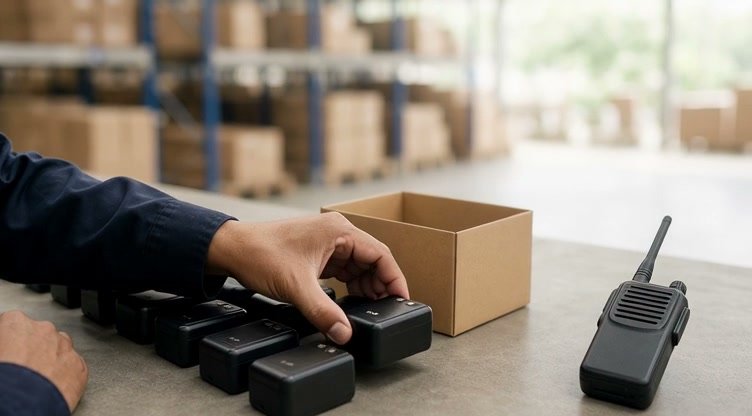
Generated scene illustration; not a photograph of this customer or the exact equipment.
Start with the specified battery, look at what the quantity does and does not tell us, then build a practical brief for your own battery order.
Customer order facts, with practical notes for a similar job. Suggested checks are not a record of work carried out for this customer.HAVI LOGISTICS (M) SDN BHD
The item description specifies SC-F1 batteries. It does not list a new transceiver or a bundle of radio equipment alongside them.
For another team making a battery enquiry, that specificity is useful. Provide the exact radio model and the markings on the existing battery and charger. A description such as “the black walkie-talkie battery” leaves too much to guess.
Clear model and part-reference information helps the supplier check the right item before quoting.
HAVI LOGISTICS (M) SDN BHD
The ordered quantity is 12. The invoice does not say whether the batteries were intended as replacements, extra spares or a mixture of both. Nor does it establish the number of radios in HAVI’s fleet.
For your own team, keep those questions separate. Count the units needing replacement and the additional spares you want available, then check how those quantities fit your charging arrangements.
The total becomes easier to explain when your stock list shows what is being replaced and what is being added.
HAVI LOGISTICS (M) SDN BHD
The invoice links to a delivery order dated 12 March 2026. That gives the purchase another document reference, but does not by itself prove the customer’s receipt date.
When receiving a similar order, check the part description and quantity against the agreed list, and keep the receipt record with it. It is a small administrative step that makes the next stock count easier.
Record the quantity and part received against the purchase list, then update the stock record.
HAVI LOGISTICS (M) SDN BHD
Before asking for a quote, gather the radio model, existing battery reference, charger model and required quantity. Explain whether you are replacing a known number of units or building a spare pool.
If the reason is short operating time, describe what users are experiencing and the charging arrangement. Ask for a compatibility check and an appropriate assessment instead of assuming that a battery purchase alone explains or solves the problem.
Ask the supplier to confirm the battery and charger combination for your exact equipment. Do not assume fit from a similar shape or model name.
Yes; HAVI’s reviewed order lists 12 SC-F1 batteries and no new transceivers. For your own equipment, provide the exact model and battery reference so the supplier can check the part.
Start with the exact radio model, the existing battery markings and the charger model. Ask the supplier to confirm compatibility before ordering. A similar-looking battery or a shortened product name is not a sufficient specification.
Separate the units you need to replace from any extra spares, then consider simultaneous users and the charging arrangement. HAVI’s quantity of 12 is an order fact, not a recommended spare ratio for every logistics team.
This invoice contains no runtime specification or test result. Explain the shift and usage pattern, then ask for the exact battery specification and how operating time should be checked with your equipment. We cannot promise a full shift from this order alone.
The invoice cannot diagnose that. Describe the symptom and give the service team the radio, battery and charger details so it can advise on the appropriate check before a parts order is treated as the fix.
Check the specified part and quantity against the agreed order, retain the receiving record and update the stock list. HAVI’s invoice links to a delivery order, which illustrates the document trail; that link alone does not establish receipt.
Based on OBOR KUASA customer invoices for March 2026. The invoice does not record battery runtime, the reason for purchase or a confirmed receipt date. Practical checklists are suggestions for a similar enquiry. Generated visuals illustrate the topic.
Send the radio model, battery reference, charger details and quantity. We can start by checking the part you need.
LET’S TALK ABOUT YOUR JOB