

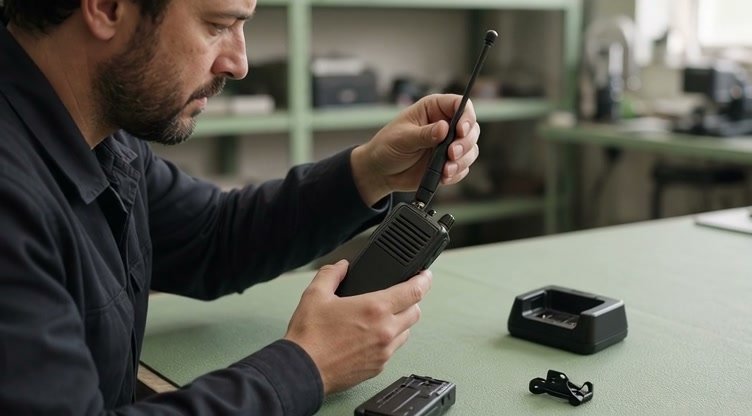
 01 / THE RADIO ON THE BENCH.
The radio on the bench.
The TANKER T800 repair entry names an antenna, battery and belt clip, plus servicing.
04 / SERVICE & REPAIR
A T800 repair, a charger and a new SC-F1 radio on the same order.
Nextgreen Pulp & Paper’s April 2026 order combines several kinds of work. There is a TANKER T800 repair entry, a T800 charger set and one new SWIFTCOM SC-F1 radio. The useful part is that they are listed separately. Someone checking the order can see which costs and items belong to the service work and which belong to additional equipment.
01 / THE RADIO ON THE BENCH.The TANKER T800 repair entry names an antenna, battery and belt clip, plus servicing.
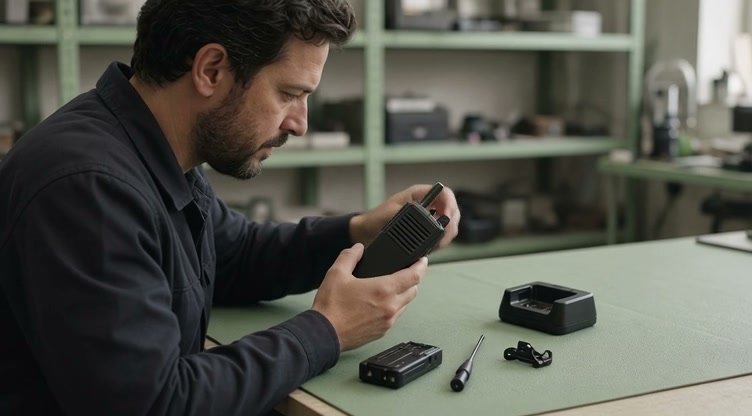 02 / THE REST OF THE ORDER.
One T800 charger set and one new SWIFTCOM SC-F1 radio appear as separate items.
Generated scene illustration; not a photograph of this customer or the exact equipment.
Start with the repair entry, follow the other equipment on the order, and use the distinction to prepare a clearer service enquiry of your own.
Customer order facts, with practical notes for a similar job. Suggested checks are not a record of work carried out for this customer.NEXTGREEN PULP & PAPER SDN BHD
The service-and-repair line names an antenna, a battery and a belt clip, followed by servicing. This is more specific than an unexplained “radio repair” line: it tells the reader which parts are included in the scope.
It does not, however, establish the original fault. The problem field is blank, so a damaged antenna, a worn battery or any other diagnosis would be an assumption.
Keep parts and service scope understandable. A named part is useful order detail; it is not by itself proof of the fault.
NEXTGREEN PULP & PAPER SDN BHD
A T800 charger set appears separately from the repair entry. So does one SWIFTCOM SC-F1 radio. The order brings these items together without describing the new SC-F1 as a replacement for the T800.
For another purchasing team, this is a useful distinction to keep: service work, charging equipment and new radios should be clear enough to review separately.
List every accessory sent with a radio so the return check covers the whole bundle.
NEXTGREEN PULP & PAPER SDN BHD
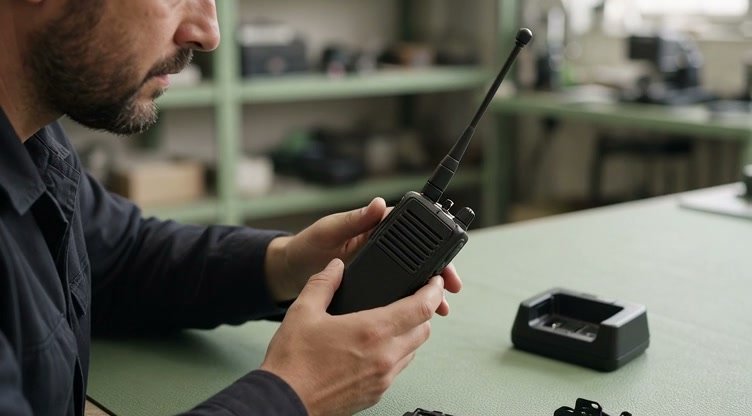
A repair order and a service report do different jobs. The order lists the agreed scope; the report should record what was found and checked. Here, the invoice gives us the scope and additional items, but not the final test result or turnaround time.
For your own job, ask which checks will be recorded after the work and how the service team will tell you about anything still unresolved.
Agree the functional checks relevant to the reported problem and ask for the findings at handover.
NEXTGREEN PULP & PAPER SDN BHD
Before sending a radio, note the exact model, what happens when you use it and whether the problem is constant or intermittent. If charging is involved, identify the battery and charger as well. Keep a list of the equipment you send.
Ask for a scope that separates assessment, parts, labour and any new equipment. That makes the repair option easier to compare with a replacement proposal without assuming either one is automatically the better choice.
Request a clear repair scope and, if needed, a separate replacement proposal. Compare the included work, equipment and terms rather than just the headline amount.
Start with an assessment and a clear repair scope. Compare that with a separate replacement proposal if necessary, including the work and equipment each covers. This invoice shows repair and new equipment on one order; it does not establish which option is best for your radio.
An antenna, battery and belt clip were named, plus servicing. A T800 charger set and one new SC-F1 were separate items on the same order.
No. The named parts tell us the scope, while the problem field is blank. A fault diagnosis needs an assessment record, not an inference from the parts ordered.
First describe the symptom and ask the service team which items it needs. If charging is part of the problem, provide the battery and charger details. Record every item sent so the return can be checked against the same list.
Ask for the new equipment to be identified clearly, including whether it is an addition or a proposed replacement. Here, the SC-F1 is a separate new-radio item. The order does not describe it as replacing the T800.
A list of the returned equipment, the work performed, the checks agreed for the reported problem and any unresolved issues. The Nextgreen invoice records the ordered scope but does not include the final test results.
Based on OBOR KUASA customer invoices for April 2026. The invoice records the repair scope, but not the final test result or turnaround time. Practical checklists are suggestions for a similar enquiry. Generated visuals illustrate the topic.
Start with the model and the symptom. Include the charger and battery details if the problem involves charging.
LET’S TALK ABOUT YOUR JOB