

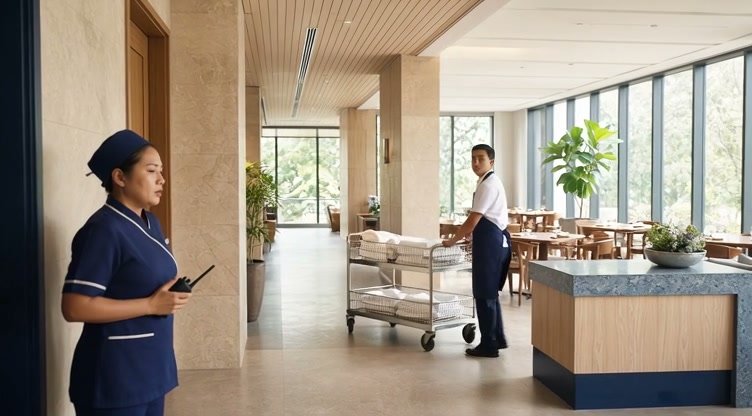
 01 / TWO DEPARTMENTS.
Two departments.
Thirty SC-680 radios are listed for the Hotel department, with matching earpiece quantities and extra batteries.
01 / HOTEL & F&B
A 50-radio order that puts the Hotel and F&B departments on separate equipment lists.
Hotels & More Trading ordered 50 radios in March 2026, but the useful detail is how the list was split. Hotel had 30 SWIFTCOM SC-680 sets. F&B had 20 SC-F2 sets. Batteries and earpieces were counted by department as well. For another hotel planning an order, this is a useful place to start: write down who needs what before settling on a total.
01 / TWO DEPARTMENTS.Thirty SC-680 radios are listed for the Hotel department, with matching earpiece quantities and extra batteries.
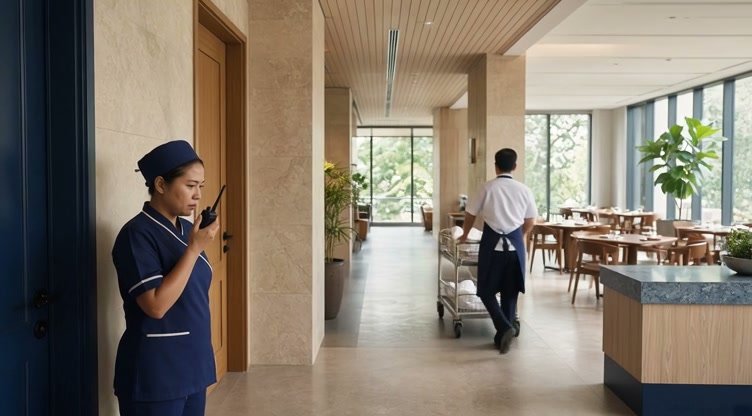 02 / TWO EQUIPMENT LISTS.
Twenty SC-F2 radios are listed for F&B, together with 20 earpieces and eight extra batteries.
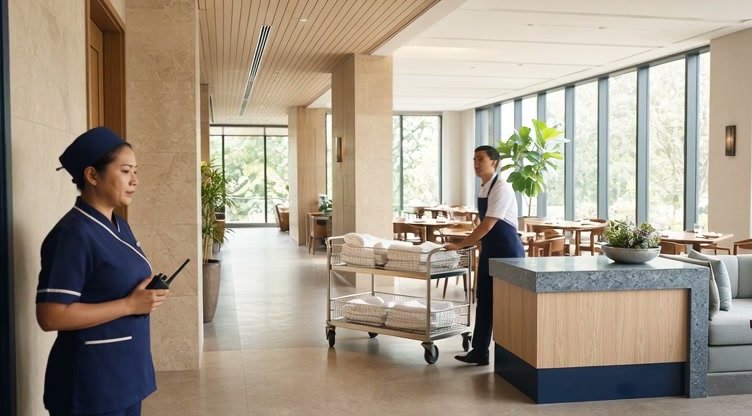
Generated scene illustration; not a photograph of this customer or the exact equipment.
Follow the two department lists, the programming scope, and the questions a similar hotel can take into its own planning meeting.
Customer order facts, with practical notes for a similar job. Suggested checks are not a record of work carried out for this customer.HOTELS & MORE TRADING SDN BHD
The Hotel section lists 30 SC-680 radios, 30 extra batteries and 30 earpieces. Keeping those numbers together gives purchasing a clear list to check against. It also avoids leaving the accessories as an unspecified add-on.
The order does not explain the staffing or shift pattern behind the quantity. Another hotel should work out its own number from the people who need a radio at the same time.
A staff headcount and a radio quantity answer different questions. Note shift overlap and any radios that must stay at a fixed post.
HOTELS & MORE TRADING SDN BHD
The F&B section lists 20 SC-F2 radios across two lines of 16 and four. It also lists 20 earpieces and eight extra batteries. That is a different spare-battery quantity from the Hotel section, even though both departments have an earpiece for every radio ordered.
The record does not tell us why these two models were selected. What it does show is a department-by-department equipment list, which makes the differences easy to see.
List earpieces, batteries and chargers against the exact radio model. Do not assume the same accessory fits both department setups.
HOTELS & MORE TRADING SDN BHD
Application handling and on-site programming appear in the scope. The proposed visit sets aside two technicians for one working day after MCMC Apparatus Assignment approval. Frequency updates, channel configuration and basic functional testing are included.
This is the agreed scope in the order. It does not establish that approval was obtained or that the visit and tests took place.
Ask for the agreed channel list and a record of the functional checks. Keep application status separate from equipment delivery.
HOTELS & MORE TRADING SDN BHD
For a similar hotel, start with one row per department: people using radios at the same time, equipment already available, earpieces needed, spare batteries and charging space. Add a separate note for calls that must pass between departments.
Before handover, agree where calls will be checked and who will join the test. A conversation at reception does not answer whether the same setup works along every route the team uses.
Mark the places where calls matter and any current weak spots. This gives the discussion something more useful than a blanket range request.
Count the people who need a radio at the same time, then consider shift overlap, fixed posts and a sensible spare pool. This order had 50 radios across two departments; it is an example of a split, not a recommended quantity for every hotel.
That depends on the work and the existing system. This customer ordered different models for the two departments. List handling, earpiece, charging and communication needs first, then ask the supplier to confirm which models suit them.
Do not assume so from the model names. Ask the supplier to verify the exact variants and configuration for the calls you need, then demonstrate those calls. The invoice does not establish interoperability between the two department setups.
Thirty for Hotel and eight for F&B: 38 extra batteries in total. Use your own shift length and charging arrangements to plan spares; the invoice does not explain this customer’s battery calculation.
Application handling was in the order, and the on-site programming scope was conditional on AA approval. The invoice is not an approval document. Confirm the applicable requirements and status with the current MCMC guidance before arranging the relevant work.
Send the department list, simultaneous user count, existing radio models, required accessories and a simple floor plan. Mark any calls that currently fail and which teams must speak to one another.
Based on OBOR KUASA customer invoices for March 2026. Based on the March 2026 customer invoice. No site coverage result or completed approval is claimed. Practical checklists are suggestions for a similar enquiry. Generated visuals illustrate the topic.
Send your department list, current radio models and the places where calls need to work. We can start with those.
LET’S TALK ABOUT YOUR JOB