

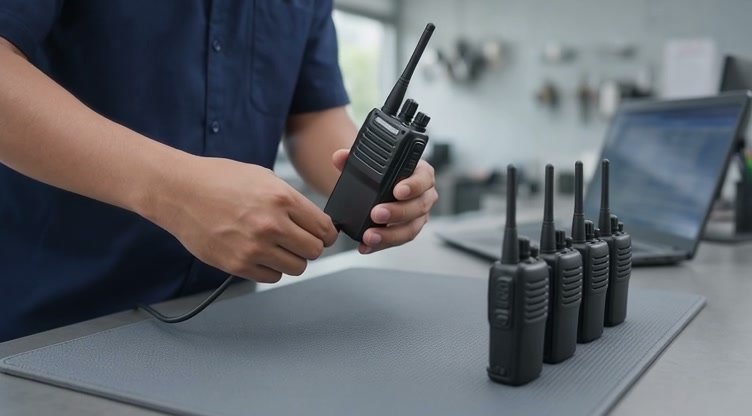
 01 / SMALL BATCHES.
Small batches.
Four reprogramming units were billed on 22 January, followed by another four the next day.
03 / RADIO REPROGRAMMING
Three small service orders, instead of a new radio package.
MBF Protection Services placed three small reprogramming orders across January and February 2026. The quantities were four, four and one. There were no new radios on those orders. It is a useful reminder to describe the help you need with existing equipment before turning every radio enquiry into a replacement purchase.
01 / SMALL BATCHES.Four reprogramming units were billed on 22 January, followed by another four the next day.
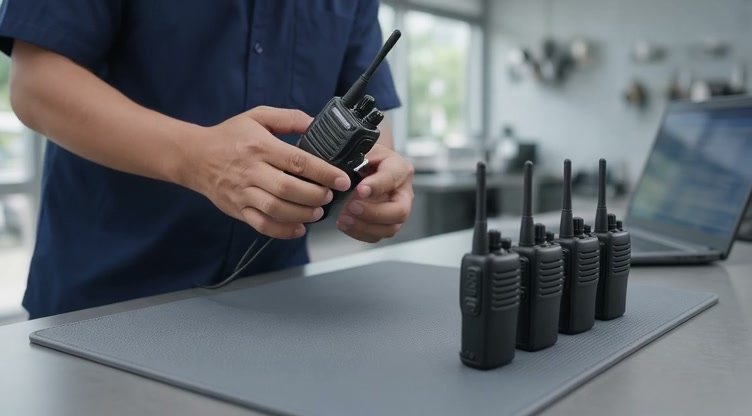 02 / THE SAME SERVICE.
A one-unit reprogramming order follows on 4 February. These three entries add up to nine billed units.
Generated scene illustration; not a photograph of this customer or the exact equipment.
The order history is brief. The useful questions are what the service covered, what still needs a separate record, and what to prepare for a similar job.
Customer order facts, with practical notes for a similar job. Suggested checks are not a record of work carried out for this customer.MBF PROTECTION SERVICES SDN BHD
Four reprogramming units were billed on 22 January, followed by another four on 23 January. Each invoice describes reprogramming as its own service item. Neither includes a new radio.
The descriptions do not explain why the work was split or identify the radio models. If your own team sends radios in batches, label each batch so the collection and return records stay clear.
Use your own asset identifiers so the team can track which radios were sent and which were returned.
MBF PROTECTION SERVICES SDN BHD
The 4 February invoice adds one billed reprogramming unit. Together, the three orders total nine service units.
That is a count of billed work. It is not a confirmed inventory of nine different radios, because the descriptions do not identify each device. For another team, this distinction is a good reason to keep a device list alongside the service order.
Repeated service entries do not tell you how many unique radios a customer owns. Use an asset register for that question.
MBF PROTECTION SERVICES SDN BHD
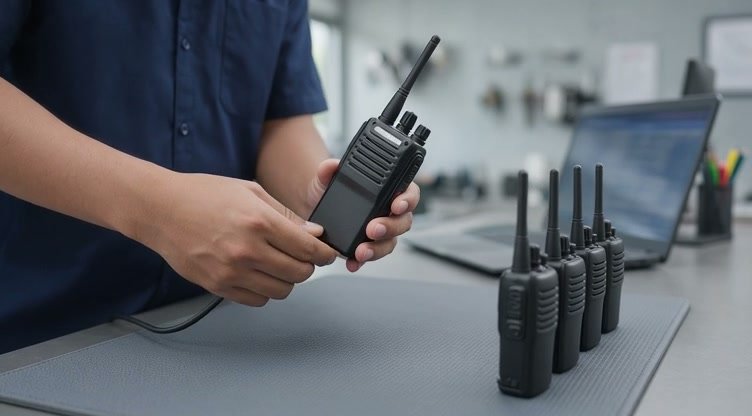
The invoices identify the type and quantity of work, but do not record the final settings or functional results. Those details belong in the programming and handover records.
For a similar job, agree what must change, which radios are in the batch and which calls should work afterwards. Ask how the existing configuration will be retained before authorised changes are made.
Name the radios that must communicate and the calls to demonstrate. Keep the resulting configuration record with the equipment owner.
MBF PROTECTION SERVICES SDN BHD
When asking about your own radios, explain what happens: one unit cannot call the others, a team has changed its channel plan, or calls fail in a particular place. Include the exact model variants and an equipment count. These are examples for your enquiry, not reported faults from MBF.
Let that information guide whether the next step is a settings check, a repair assessment or a site investigation. “Reprogram it” is a proposed action, not yet a diagnosis.
If the failure happens only along certain routes, mark those places. A settings change should not be presented as a proven fix for an untested coverage issue.
When it needs an authorised configuration change or a technician suspects a settings mismatch. Start by describing the required calls and the symptom. MBF’s invoices confirm reprogramming was ordered, but do not say why it was needed.
No. These three MBF orders list reprogramming without new radios. Whether your own units remain suitable needs a check of the equipment and required system; this record alone cannot answer that for another team.
Do not assume that it will. Tell the technician exactly where calls fail so settings, equipment and site conditions can be considered. A route-dependent problem may need a coverage investigation rather than a programming-only job.
Provide the exact model variants, your asset list, a clear symptom description and the authorised requirements for the work. Agree what configuration records and call checks you expect at handover.
The three quantities add up to nine billed service units. The descriptions do not establish that they were nine unique devices, so we do not use that number as an equipment count.
Reconcile the returned units against your asset list, review the agreed configuration record and demonstrate the required calls. Record anything still unresolved. The MBF invoices do not include those handover results.
Based on OBOR KUASA customer invoices for January–February 2026. Nine is the sum of billed service quantities, not a verified count of unique devices. Site and performance details are not recorded. Practical checklists are suggestions for a similar enquiry. Generated visuals illustrate the topic.
Send the models, the number of units and a short description of what is happening. That is enough to start the service discussion.
LET’S TALK ABOUT YOUR JOB