

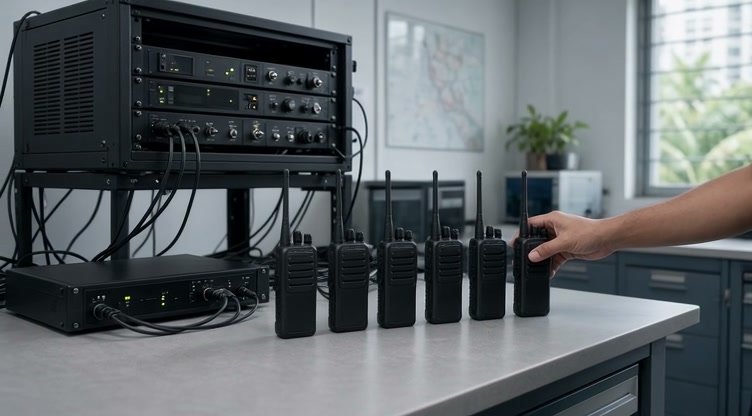
 01 / ONE REPEATER.
One repeater.
Each order lists a Motorola SLR-5300 repeater: UHF in April and VHF in May.
05 / REPEATERS & HANDHELDS
A UHF package in April. A separate VHF package in May.
Usahasama Emas ordered a Motorola SLR-5300 UHF repeater and six XiR P6620i TIA UHF handhelds in April 2026. A separate May order lists the VHF versions in the same one-to-six combination. These are two equipment orders. The useful planning lesson is to read the repeater and handheld variants together, while keeping configuration and site coverage as separate checks.
01 / ONE REPEATER.Each order lists a Motorola SLR-5300 repeater: UHF in April and VHF in May.
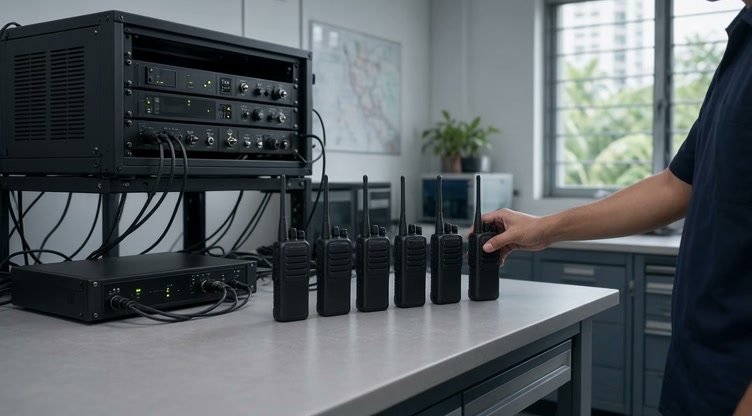 02 / SIX HANDHELDS ALONGSIDE IT.
Each repeater is paired on its order with six P6620i TIA handhelds in the same band.
Generated scene illustration; not a photograph of this customer or the exact equipment.
Follow the UHF order, the separate VHF order, and the checks a team should make before treating an equipment list as a working system.
Customer order facts, with practical notes for a similar job. Suggested checks are not a record of work carried out for this customer.USAHASAMA EMAS SDN BHD
The April order lists one SLR-5300 UHF repeater with six P6620i TIA UHF handhelds. The band is written against both types of equipment.
That is a useful detail to retain when requesting a quote. A family name alone does not communicate the exact variant being ordered.
When sending a request, include the exact variant of existing radios, not just the product family name.
USAHASAMA EMAS SDN BHD
The May order again lists one SLR-5300 and six P6620i TIA handhelds, this time in VHF. It is a separate VHF equipment order, not six additional UHF radios for the April list.
Across the two orders there are two repeaters and 12 handhelds. The invoices do not establish the site locations, installation status or a connection between the two systems.
Label equipment by its intended system so a total quantity does not hide different bands or configurations.
USAHASAMA EMAS SDN BHD
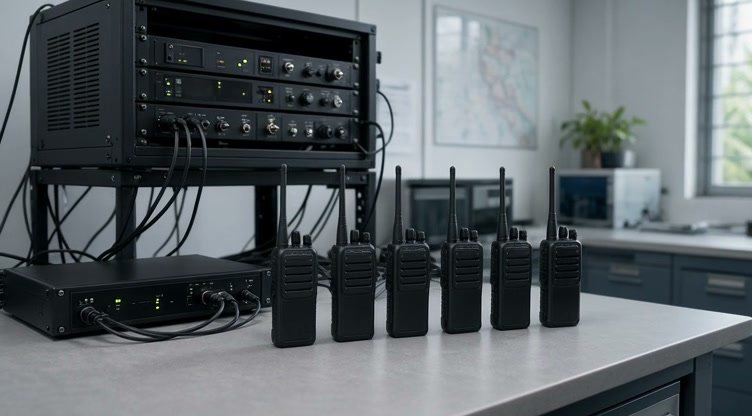
The records show the same band on the repeater and handheld entries within each order. They do not show the final channel configuration or a successful communication test.
For a similar purchase, have the supplier confirm the exact variants, intended operating mode and required configuration together. Matching “UHF” or “VHF” labels should not stand in for that review.
Describe which handhelds must use which repeater and ask the supplier to demonstrate the intended calls.
USAHASAMA EMAS SDN BHD
Prepare the operating areas, routes, current equipment and the places where calls must work. Identify any existing repeater equipment and what the new order is expected to add.
Ask how the proposed arrangement will be checked at the site. The equipment quantity in this case is useful purchasing evidence; it is not a coverage measurement another site can reuse.
Name the work areas and user routes that matter. Agree the test scope before treating equipment delivery as the end of the job.
Do not specify them as a directly matched radio pair. The April order lists UHF on both equipment types; the May order lists VHF on both. Any requirement to connect separate systems needs its own design review, which these invoices do not document.
No. Ask for a review of the exact equipment variants, operating mode and required configuration, followed by a demonstration of the intended calls. The matching band descriptions here are order details, not test evidence.
The six handhelds in each order are purchase quantities, not a stated system capacity. Describe your user count and how calls need to be handled so the proposed system and any required options can be assessed.
This case cannot answer that. It contains equipment supply records, not a coverage map. Provide the site and required operating areas, then agree an assessment and test scope for the proposed arrangement.
The invoices do not establish either fact. They record two separate orders a month apart: one UHF combination and one VHF combination.
Bring the exact equipment variants, user groups, required call paths, a site plan and any existing assignment information. The supplier can use that brief to identify the technical and regulatory details that need confirmation.
Based on OBOR KUASA customer invoices for April–May 2026. Equipment supply records are not installation or coverage-test evidence. Operating frequencies are not shown. Practical checklists are suggestions for a similar enquiry. Generated visuals illustrate the topic.
Send the site plan, current equipment variants and the areas your team needs to reach. We can discuss what needs checking.
LET’S TALK ABOUT YOUR JOB