


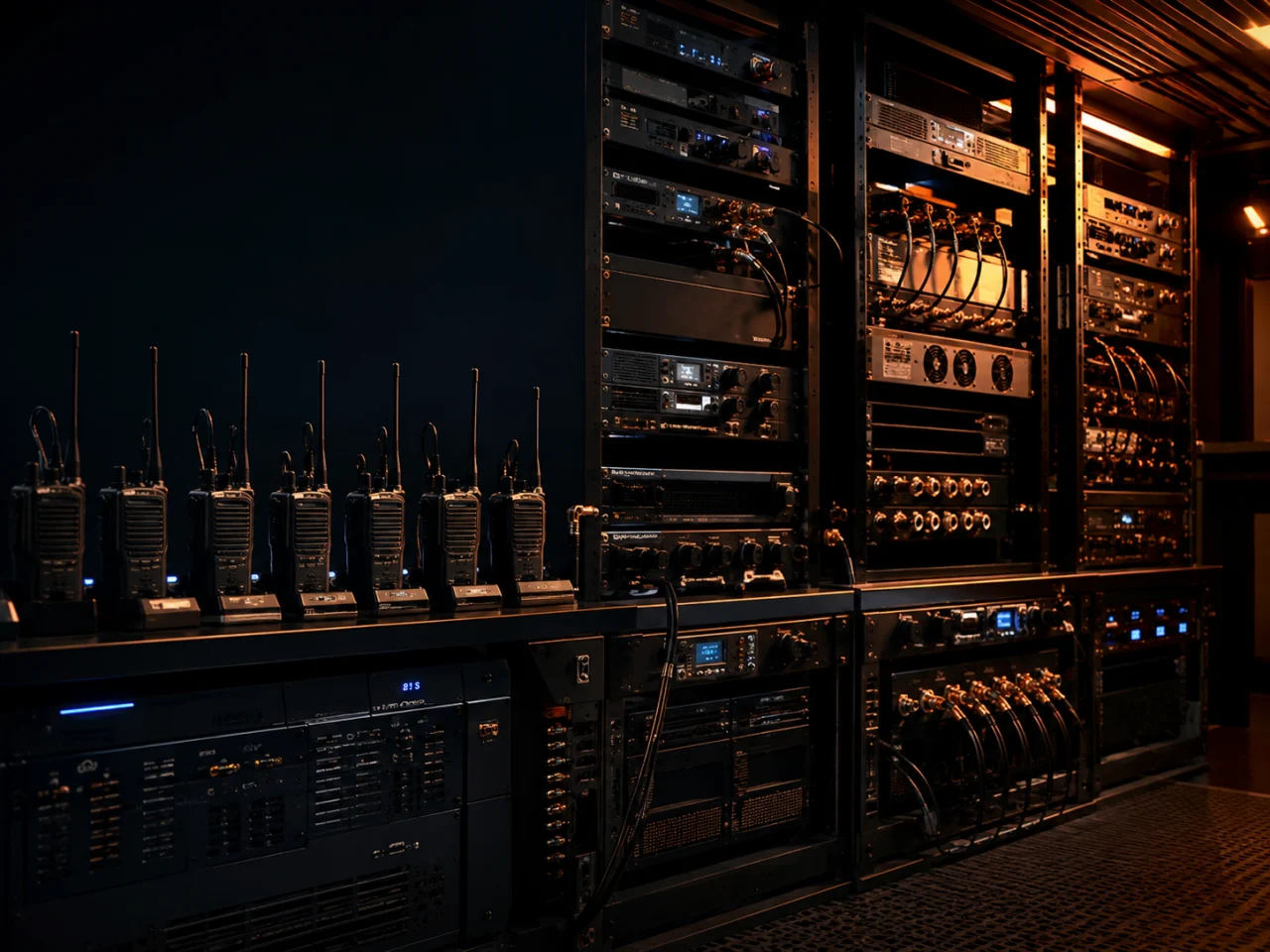
SECTION 01 / SIGNAL ROOMSIX GUIDES.
SIX GUIDES.
ONE EQUIPMENT ROOM.
Explore the repeater, six-way charger, DC backup, BDA / DAS head-end, RF distribution and alarm monitoring system.
EXPLORE THE GUIDES →FIELD GUIDE 04 Warehouse and logistics
A planning guide for keeping picking, loading and dispatch aligned through a busy shift.
Read the planning guide
Warehouse radio communication should be planned around the handovers between picking, staging, loading and dispatch. Identify the calls that change a load's next action, review the occupied aisles and bays where users work, and validate a representative workflow with named users before treating the system or channel plan as ready.
01 / CONTEXT
Warehouse communication is rarely one department talking in isolation. A picker may release a load to a staging lead, who coordinates with a loading bay and dispatch. The useful radio brief makes those handovers visible: the owner, trigger, expected recipient, shared call path and the physical place where the exchange needs to work.
Picking, staging, loading and dispatch calls that trigger work.
Racking, stock conditions, aisles, loading bays and vehicle movement.
One representative order or load movement with its real users.
02 / PLANNING PATH
Use these steps to prepare a clearer internal brief. They help surface the operating details a site survey, equipment review or authorised technical consultation needs.
Trace one order or load from the moment it becomes ready to its departure. Identify which update must reach one person, a group or an escalation contact, and what happens if it is missed.
Record racking, stock density, loading bays, mezzanines and routes under representative conditions. A quiet or empty aisle may not represent the environment during the calls that matter.
Assign the expected use of routine, shared and escalation calls in plain language. Avoid treating programming labels as a substitute for an agreed handover process.
Run a planned call sequence with the people who own the key handovers. Capture the locations, calls, outcome and unresolved point for follow-up.
03 / BRIEF CHECKLIST
The most useful inputs describe an actual load movement and the teams who need to hear it.
04 / QUESTIONS FOR THE WORK
Racking, stored materials, occupied aisles and loading areas can change the operating context. The plan should be reviewed where staff actually make the handover, not only from an office or empty floor.
Not necessarily. The call plan should be based on who must hear each kind of handover and who should not be interrupted by routine traffic. Confirm the final setup against the actual workflow.
Use an ordinary work sequence: a pick is ready, it moves to staging, loading is notified and dispatch confirms the next step. This makes the radio check meaningful to the people who use it.
05 / SOURCES AND NEXT READING
These sources provide regulatory or operating context. They do not certify this guide or substitute for the actual site's authorised requirements.