


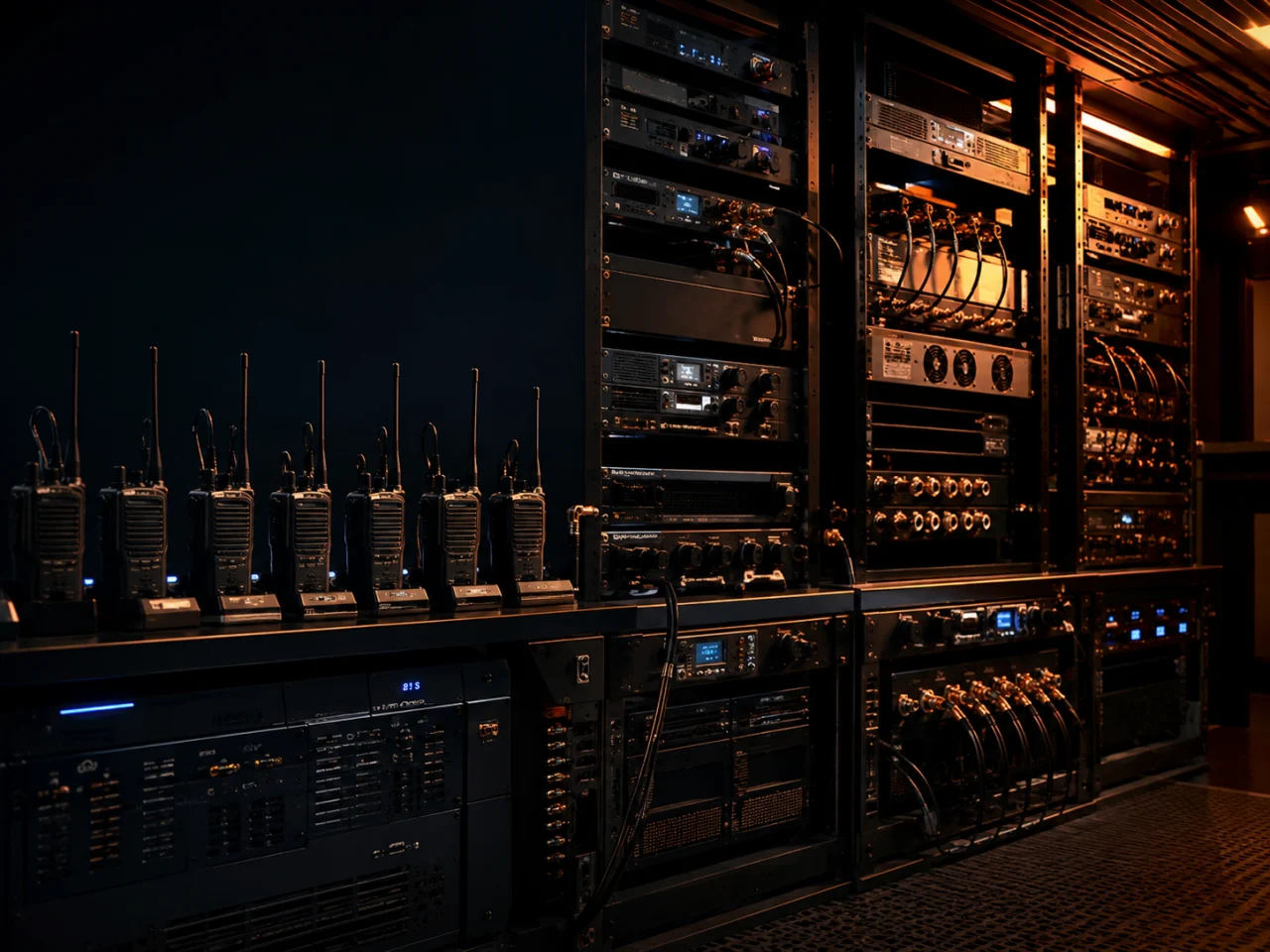
SECTION 01 / SIGNAL ROOMSIX GUIDES.
SIX GUIDES.
ONE EQUIPMENT ROOM.
Explore the repeater, six-way charger, DC backup, BDA / DAS head-end, RF distribution and alarm monitoring system.
EXPLORE THE GUIDES →FIELD GUIDE 02 Construction
A planning guide for connecting ground coordination with teams working across changing floors.
Read the planning guide
Construction-site radio coordination should be planned as a changing operating system, not a one-time equipment purchase. Map who needs to speak across floors, access points and staging areas; review the structure at the current work stage; then repeat practical checks as the site and its priority call paths change.
01 / CONTEXT
The calls that matter at ground level may not be the calls that matter after new floors, temporary works, delivery routes or trade sequences are introduced. A robust communications brief captures current responsibilities and a review point for the next site stage. It should work alongside the project’s approved safety, access and emergency arrangements rather than replace them.
Current floors, temporary works, access paths and material staging areas.
Who initiates, receives and escalates each priority coordination call.
The next structural or workflow change that requires the plan to be checked again.
02 / PLANNING PATH
Use these steps to prepare a clearer internal brief. They help surface the operating details a site survey, equipment review or authorised technical consultation needs.
Follow one representative movement from ground coordination to the working floors, including access, material staging and handover points. Identify which calls are routine and which must reach several teams without delay.
Review the actual levels, cores, temporary works and access routes that the intended users will occupy. Do not rely on a previous floor plan when the site conditions have materially changed.
Describe user groups, shared coordination calls and the escalation route in plain language. The plan should be owned by the site’s authorised operating and safety process, not treated as a standalone technical document.
Choose construction milestones that trigger a practical retest. Record the locations, users, result and outstanding issue so the next stage begins with evidence rather than a stale assumption.
03 / BRIEF CHECKLIST
Bring the current site information and the next planned change. Both are material to a useful radio-coordination discussion.
04 / QUESTIONS FOR THE WORK
Usually not. Construction conditions, occupied levels, access paths and contractors can change. The communications plan should have review points that match meaningful changes to the work.
No. Radio planning supports coordination. The authorised site safety, emergency, permit and access procedures remain the source of control for the project.
A useful test follows a real coordination path with the relevant users at the current work stage. It records the locations, expected call, result, exception and follow-up owner.
05 / SOURCES AND NEXT READING
These sources provide regulatory or operating context. They do not certify this guide or substitute for the actual site's authorised requirements.