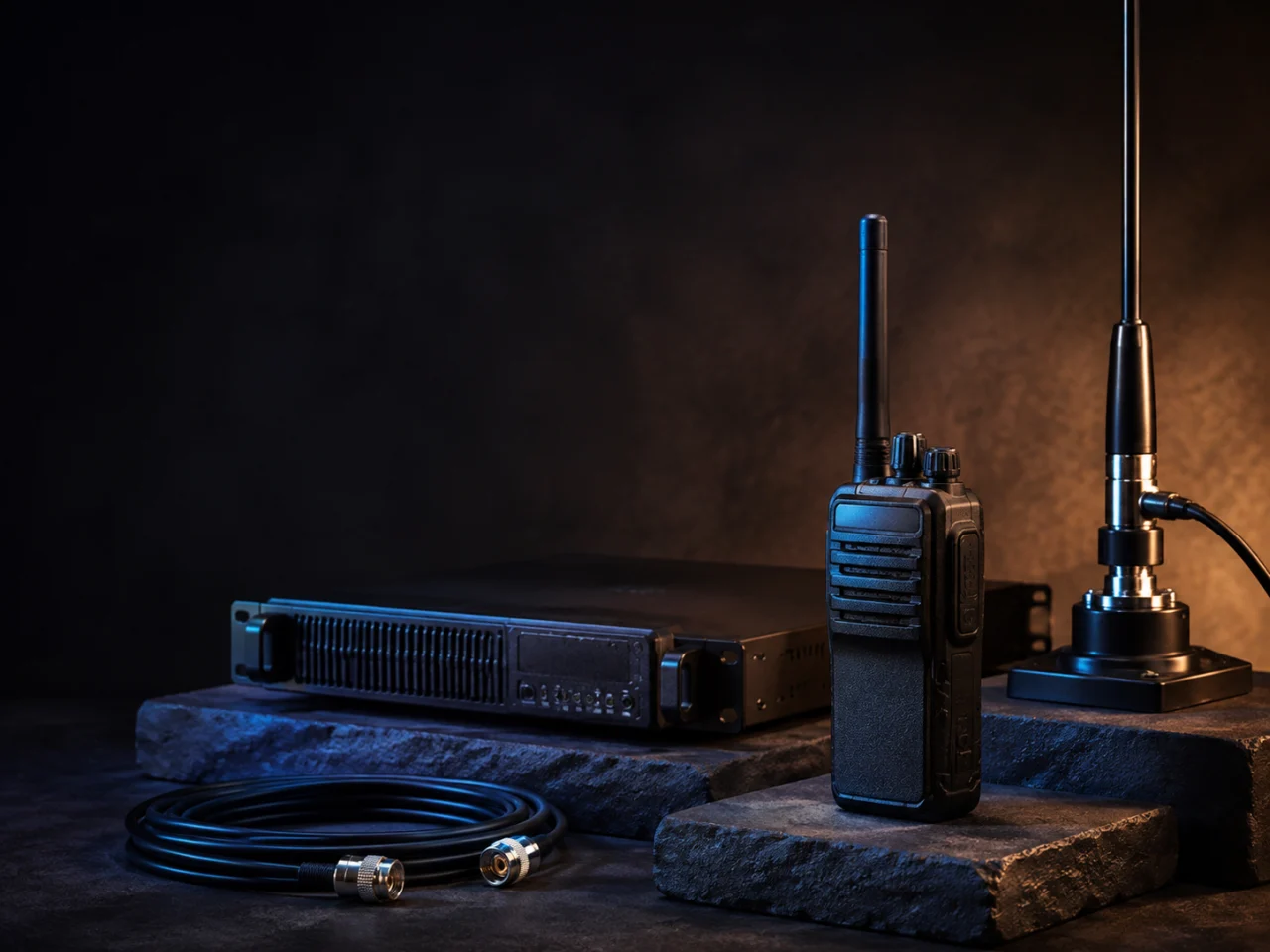


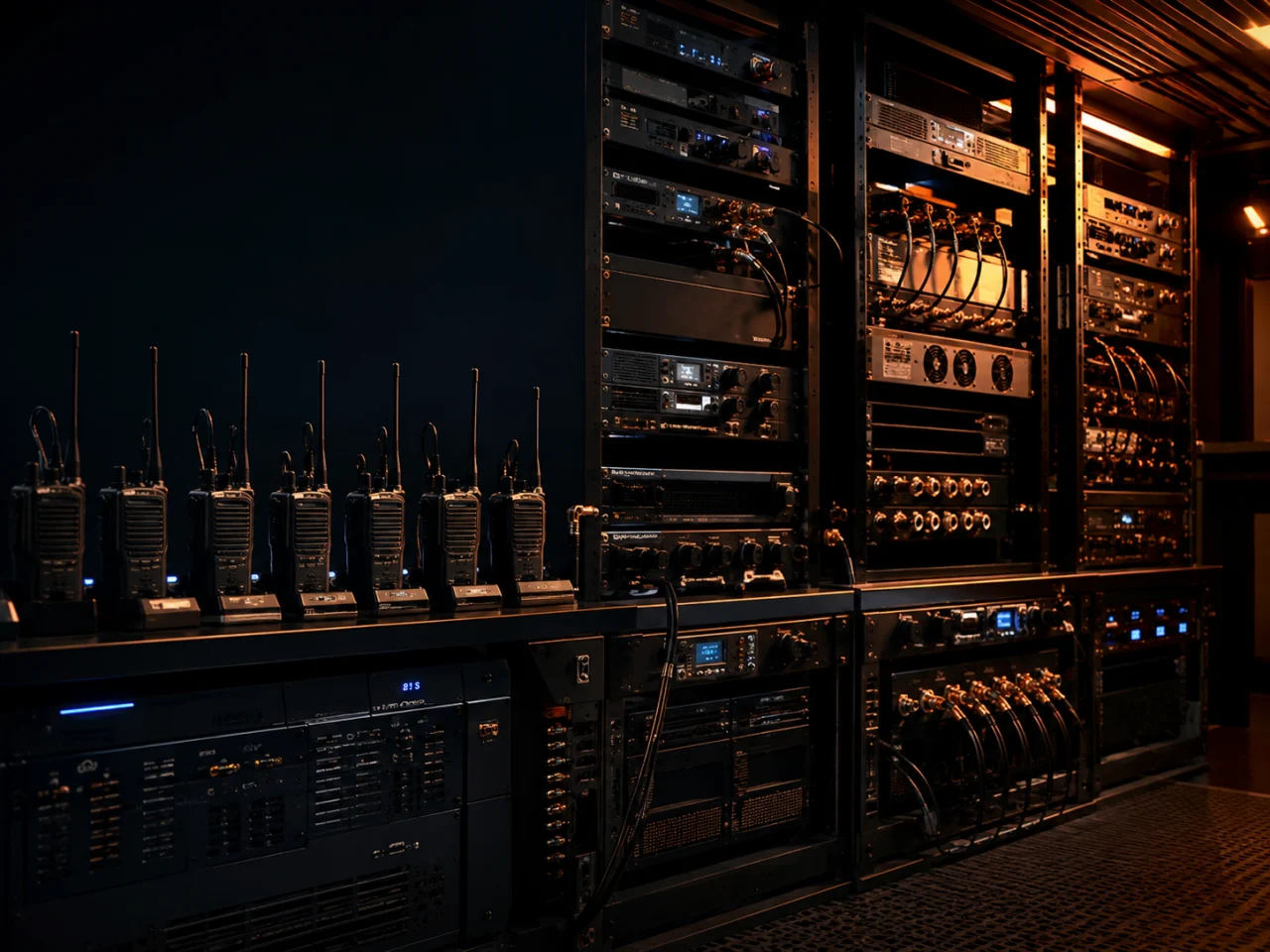
SECTION 01 / SIGNAL ROOMSIX GUIDES.
SIX GUIDES.
ONE EQUIPMENT ROOM.
Explore the repeater, six-way charger, DC backup, BDA / DAS head-end, RF distribution and alarm monitoring system.
EXPLORE THE GUIDES →FIELD GUIDE 05 Port and terminals
A planning guide for keeping vessel, yard and gate teams aligned through each handover.
Read the planning guide
Port-terminal radio communication should be planned around the handovers that move work between vessel operations, the yard and the gate. Record the authorised roles, movement paths, priority calls and escalation process; then validate representative calls under the terminal's own operating and safety controls instead of assuming that open space guarantees usable communication.
01 / CONTEXT
A terminal is a sequence of controlled handovers. Yard allocation, container movement, gate updates and service coordination can involve different teams and zones. The radio brief should not invent a new control process. It should make the existing authorised process easier to review by identifying the call that triggers each handover, the accountable role and the conditions in which it is made.
The authorised flow between vessel, yard, gate and support areas.
Updates that affect the next controlled movement or escalation.
The terminal's own operating, access and safety process remains controlling.
02 / PLANNING PATH
Use these steps to prepare a clearer internal brief. They help surface the operating details a site survey, equipment review or authorised technical consultation needs.
Choose a common controlled movement and identify each operational handover: vessel-side coordination, yard allocation, gate or transport update and any support call that must be heard.
Record the routes, stacks, crane lanes, gate areas and authorised work zones that the selected users occupy. Open areas can still have distance, structure, noise and vehicle-movement considerations.
Keep radio channels and call wording aligned with the terminal's authorised operating and safety rules. This guide is not a substitute for terminal control, maritime requirements or access procedures.
With the site owner’s approval, test the relevant calls in a representative movement. Record the context and any exception so a technical or operating change has a clear owner.
03 / BRIEF CHECKLIST
Bring the authorised movement process and the specific handovers where a clearer call path would help.
04 / QUESTIONS FOR THE WORK
No. The terminal operator's authorised operating, access, emergency and safety procedures remain controlling. This guide only helps organise a radio-planning discussion around those procedures.
Distance, equipment, stacks, noise, traffic and the real location of users can still change a call. A representative test captures the work context rather than relying on an impression from a map.
Include the people accountable for the handover and the site authority responsible for the relevant operating process. A technical change should not be accepted without the operating owner’s review.
05 / SOURCES AND NEXT READING
These sources provide regulatory or operating context. They do not certify this guide or substitute for the actual site's authorised requirements.