

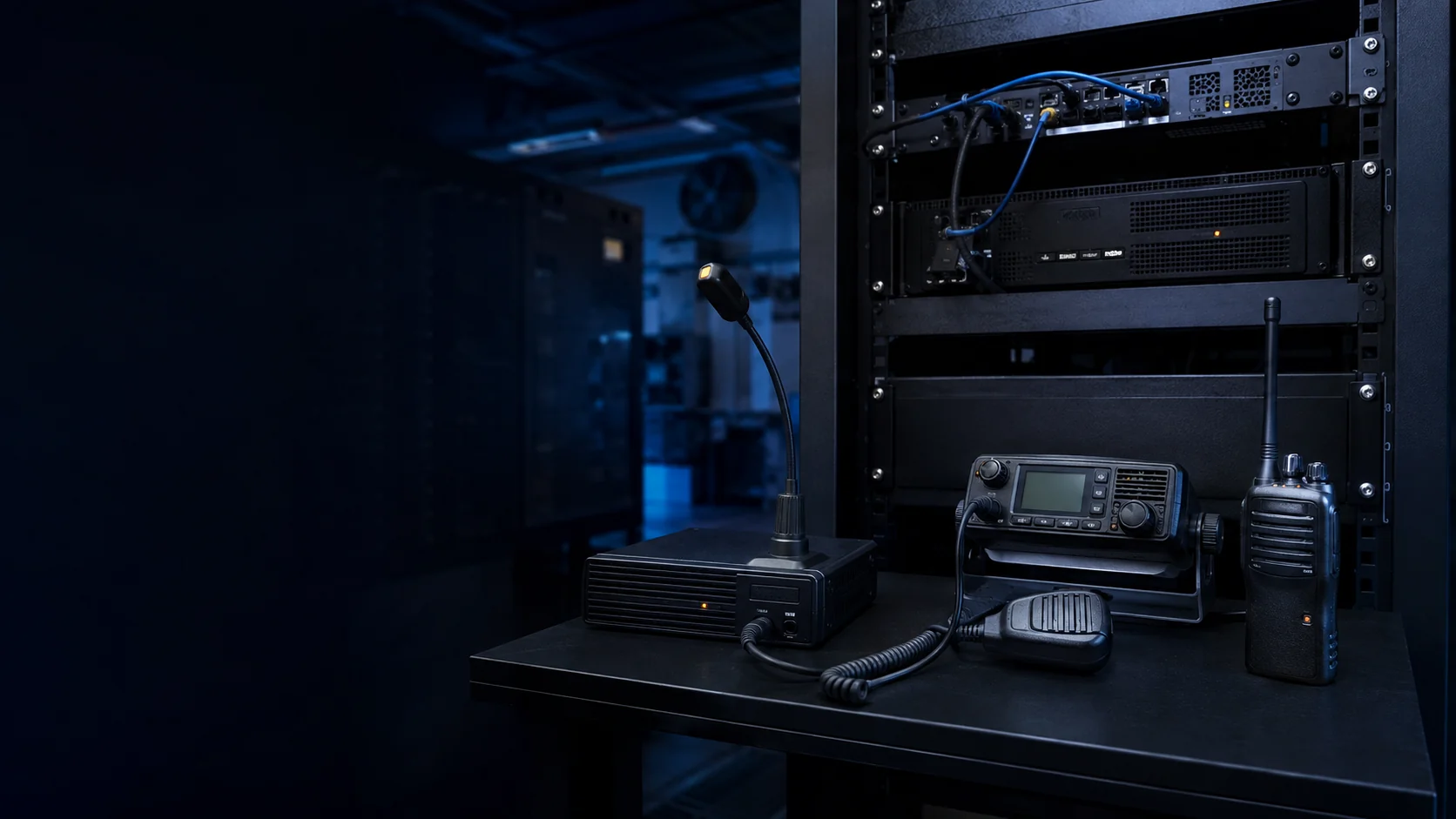
01 / Portable layer
Voice at the point of work.
Portable radios keep instructions with the people who need them—on foot, on shift and inside the task.
- UHF / VHF
- DMR
- ACCESSORIES

Obor Kuasa designs, supplies, installs and supports professional UHF, VHF and DMR two-way radio systems for industrial, commercial and remote operations across Malaysia. Each architecture starts with the site, its users and the coverage evidence required at handover.
Explore RF Site SurveySystem architecture / 01
A radio system is not a shopping list. It is a measured path from the user's radio to the antenna—and back again.
Obor Kuasa aligns equipment, programming, RF infrastructure and field verification around how the site actually operates.
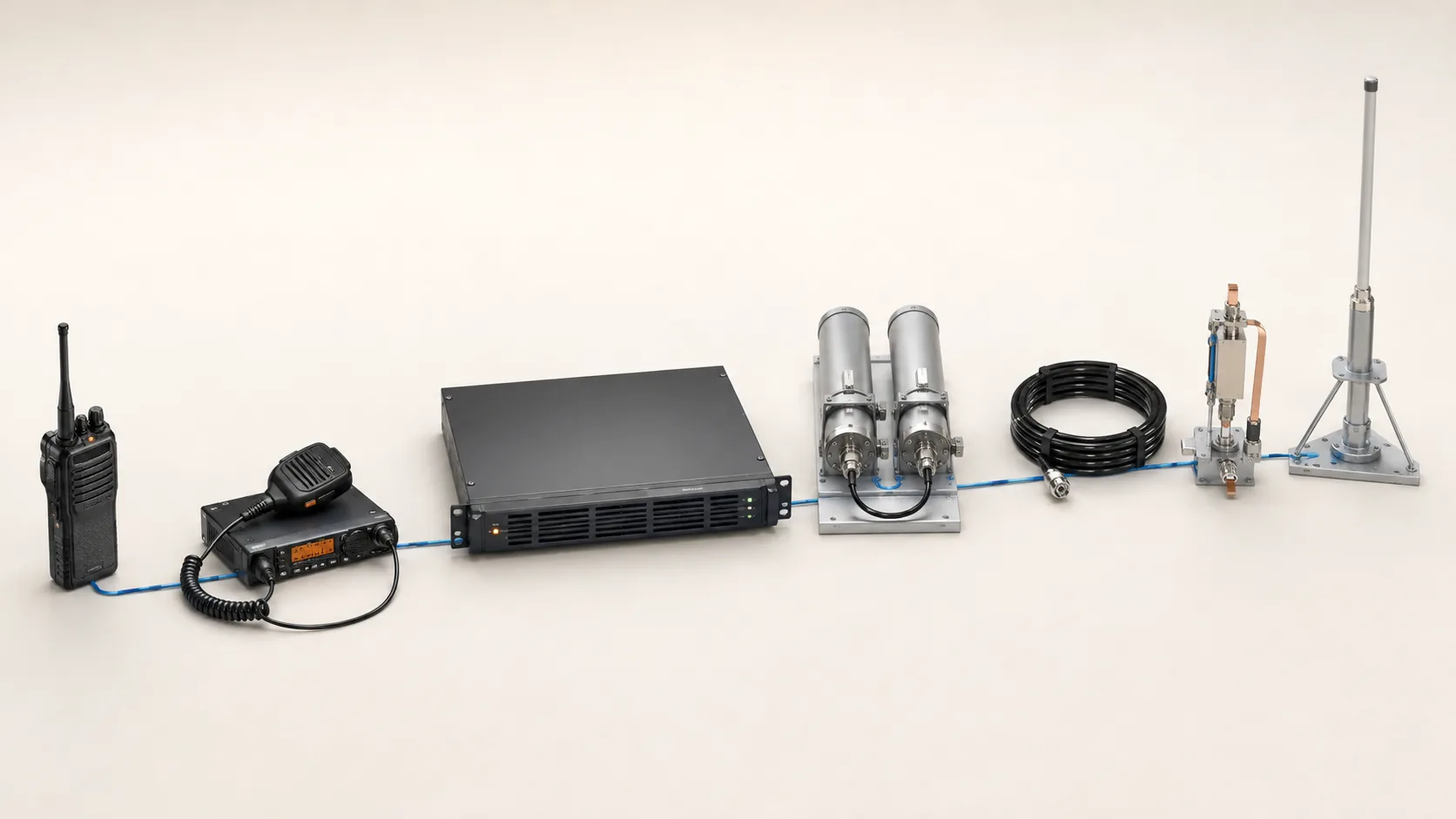
01 / Portable layer
Portable radios keep instructions with the people who need them—on foot, on shift and inside the task.
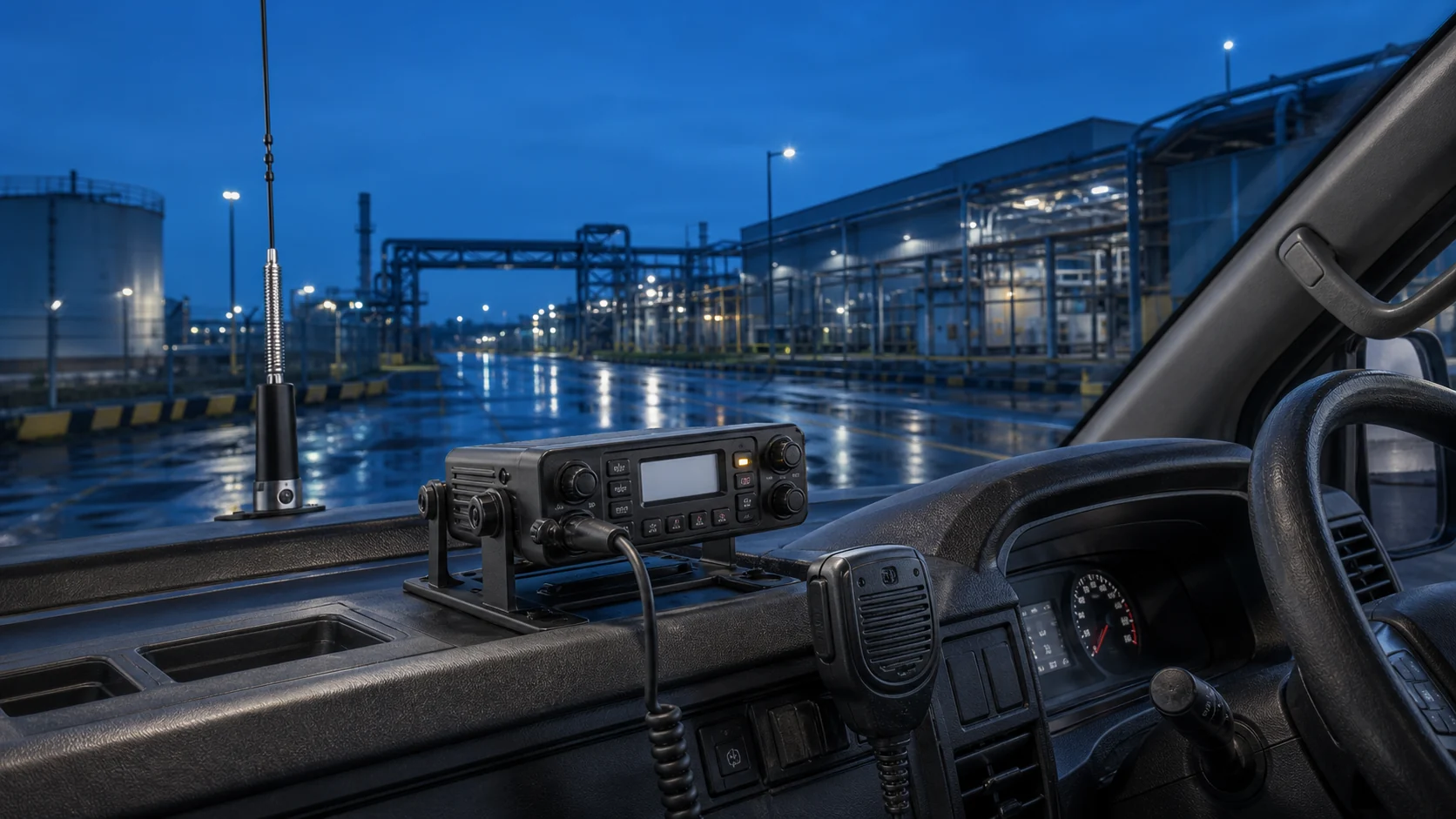
02 / Mobile layer
Vehicle-mounted radios extend working range and give drivers a stable, high-power communication point.
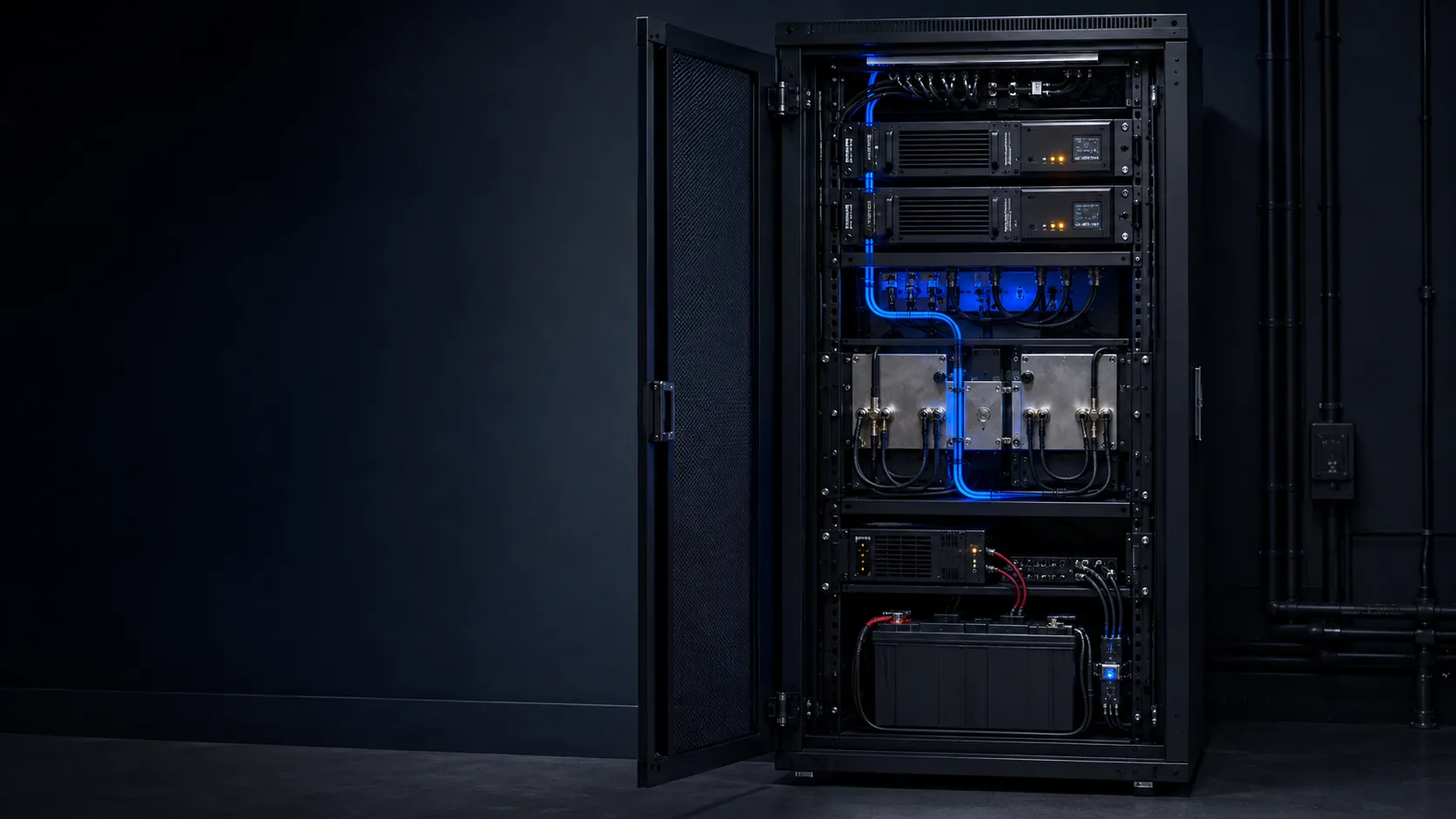
03 / Repeater core
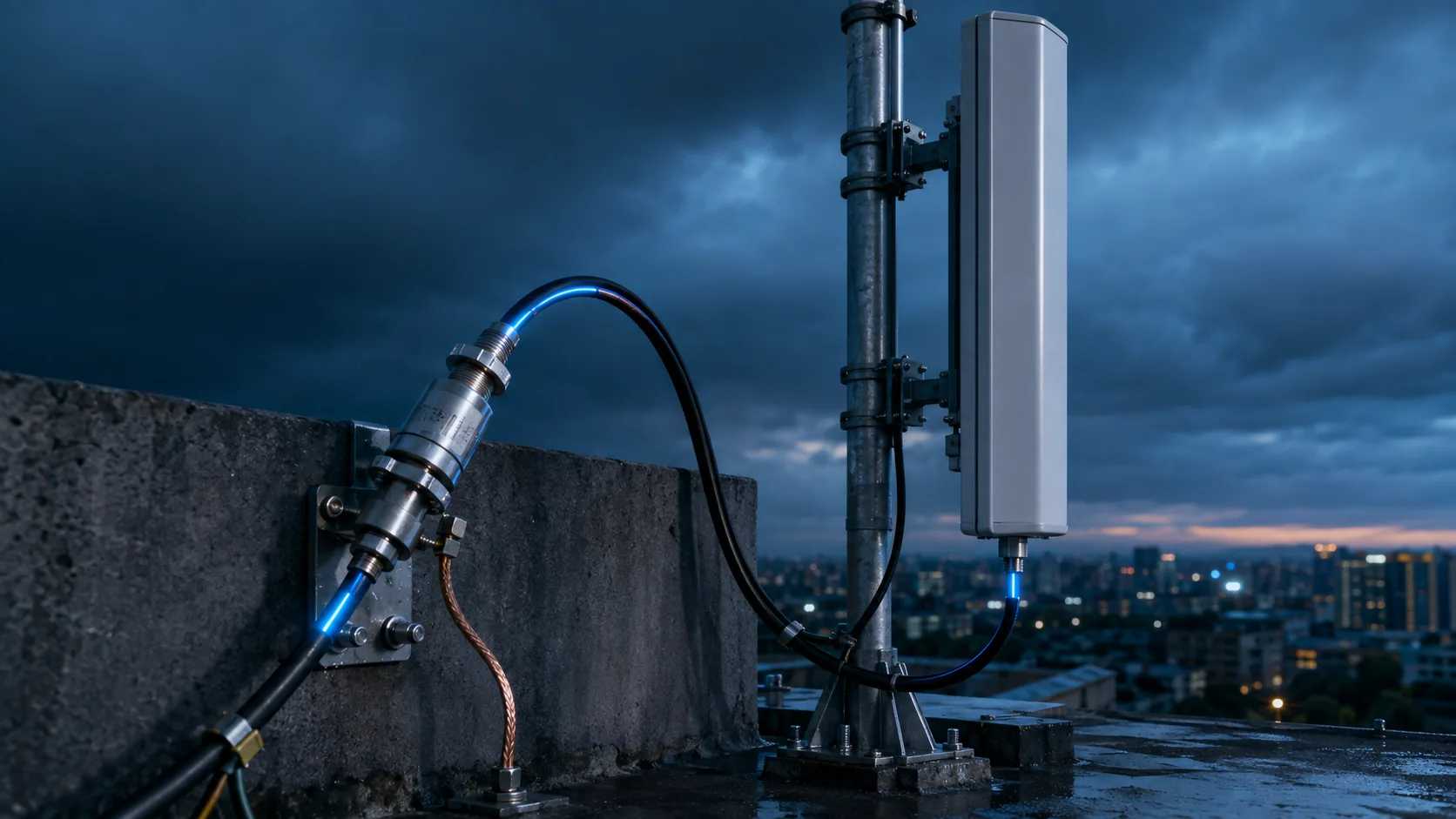
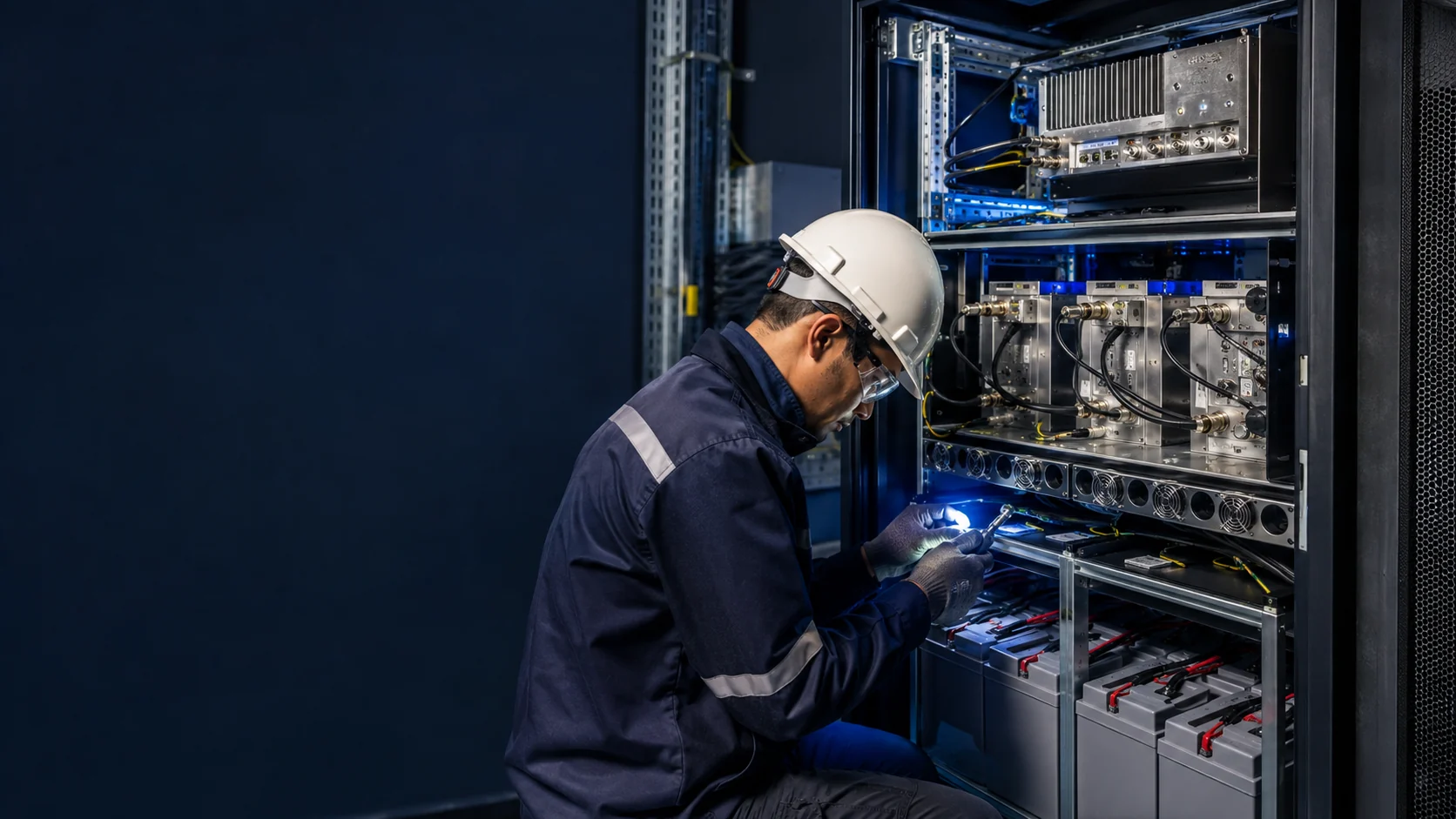
The repeater core combines RF equipment, filtering, monitored power and backup into one serviceable system.
04 / RF path
Feeders, protection, mounting and the right antenna turn equipment output into usable field coverage.
Repeater core / 02
Deployment modes / 03

Direct / simplex
Repeater coverage

In-building
Architecture decision
Coverage cannot be promised from catalogue range alone. Concrete, steel, terrain, interference, antenna position and where people actually work all change the usable radio path.
| Architecture | Use when | Verify before design |
|---|---|---|
| 01Direct / simplex | Compact sites, line-of-sight operations and contained work zones. | Obstructions, interference, user positions and practical radio-to-radio range. |
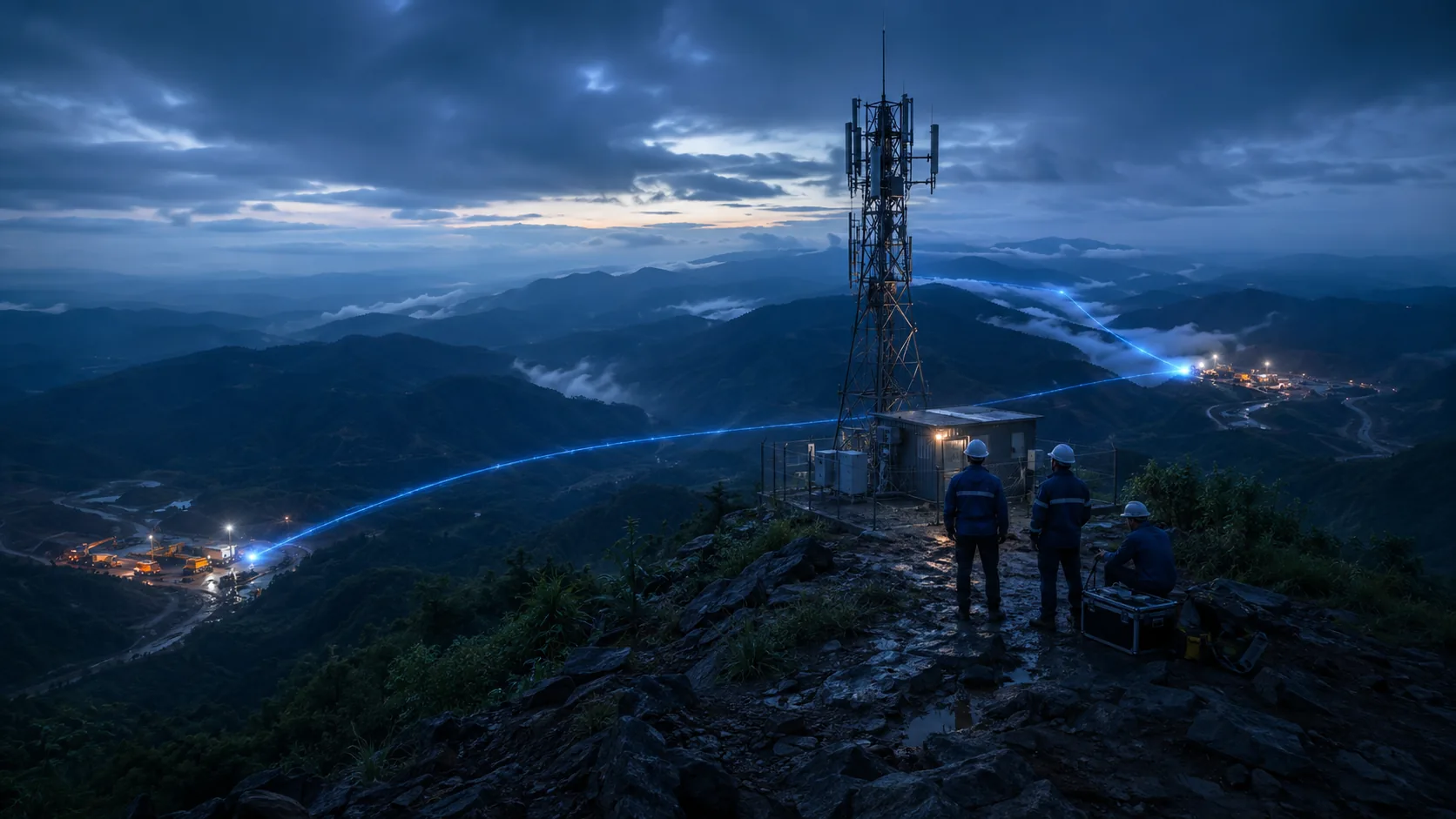
| 02Repeater coverage | Wide areas, terrain changes and multi-zone operations. | Repeater position, antenna path, linked work zones and backup-power requirement. |
| 03In-building | High-rises, basements, plant rooms and reinforced structures. | Weak interior zones, donor path, risers, antenna locations and building constraints. |

Field environments / 04
Design process / 05
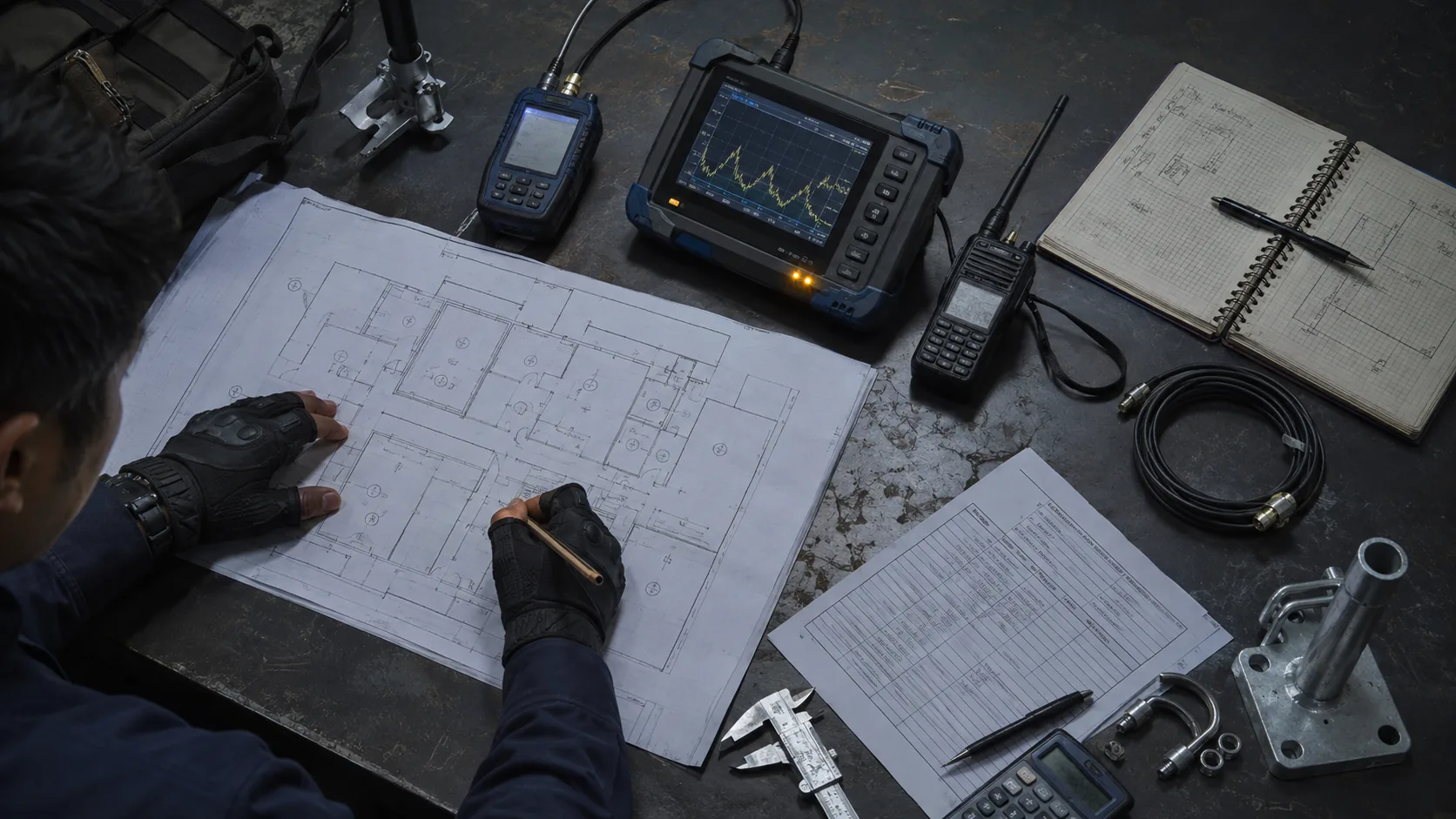
Measure the actual site, interference and failure areas.
Match equipment and RF architecture to the operating reality.
Program radios, channels, groups and system behaviour.
Build the RF path, power, protection and equipment core.
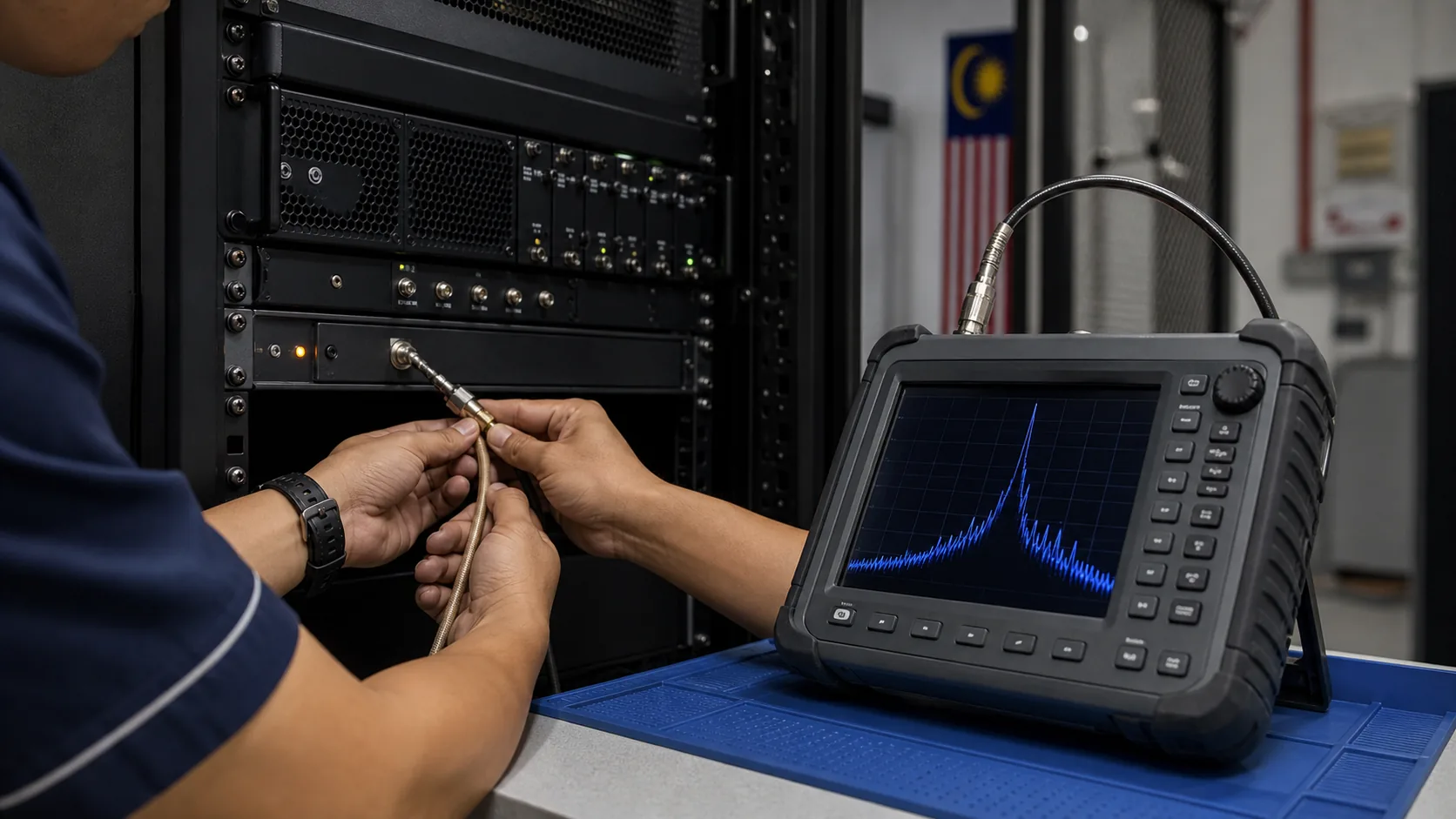
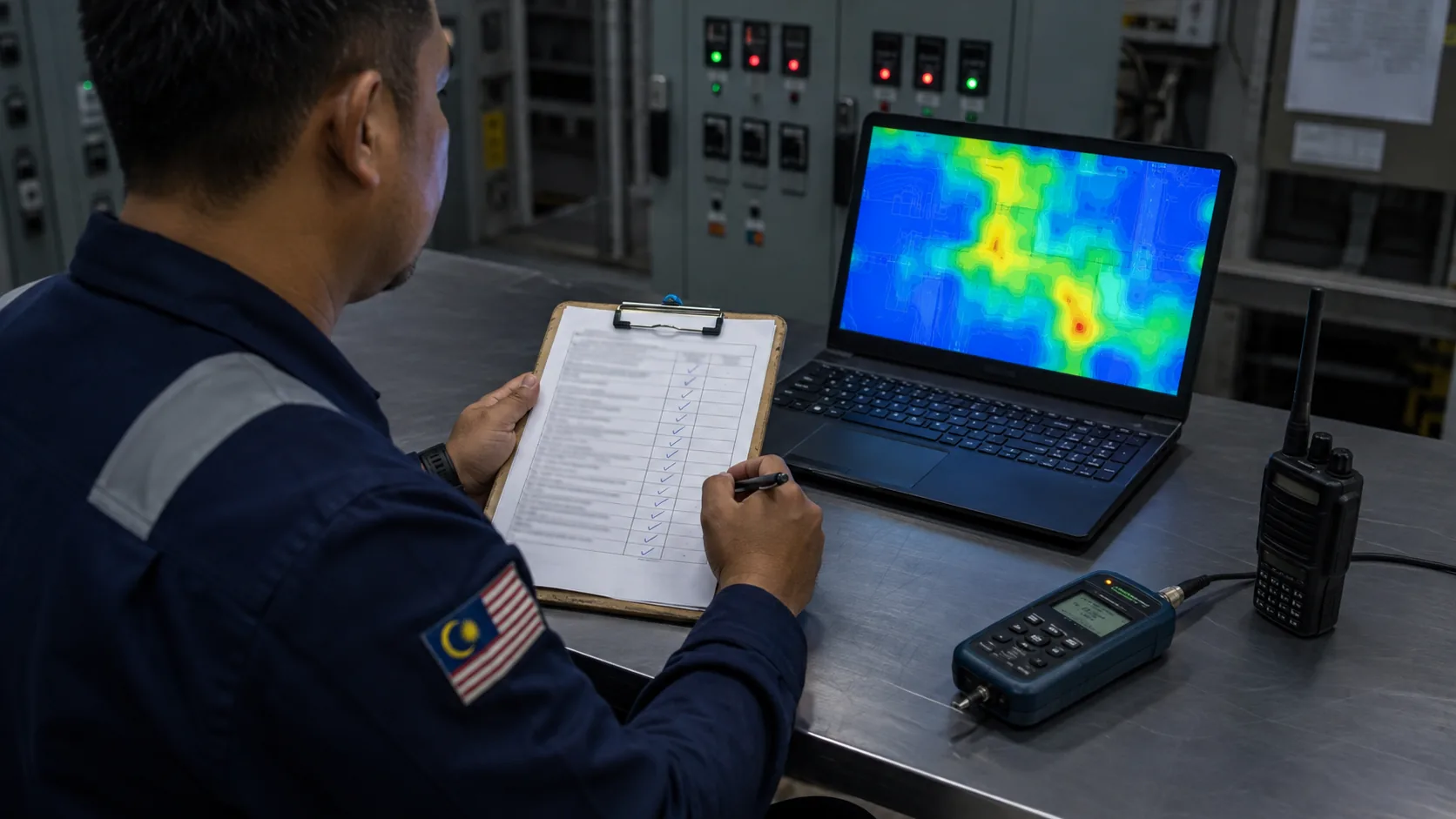
Test coverage, audio, operation and handover evidence.
Commissioning proof / 06
Support continuity / 07
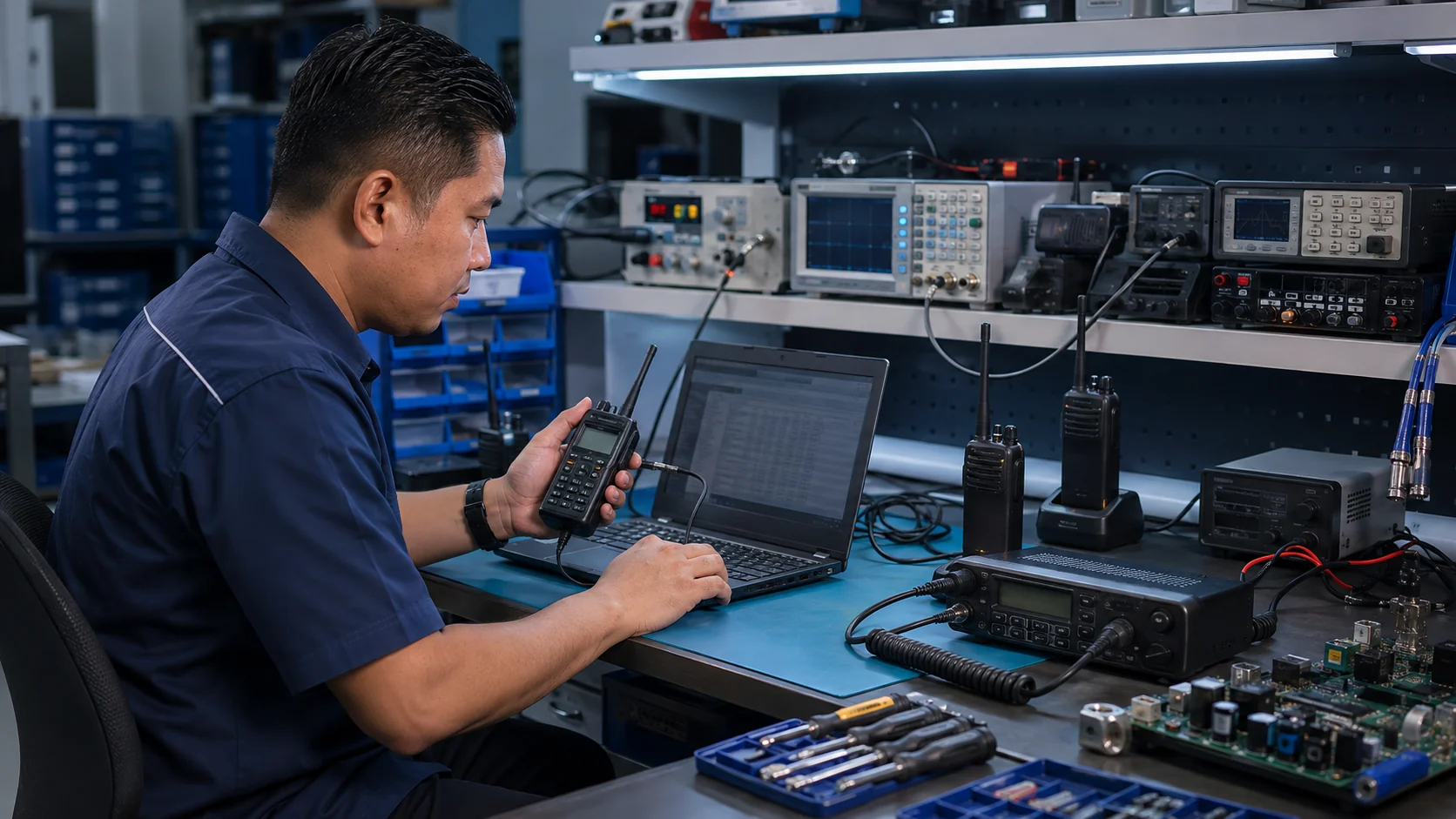
Channel plans, groups and equipment configuration.
Practical fault isolation and turnaround support.
Preventive checks for equipment and RF infrastructure.
Support aligned to the deployed system and site.
Related field evidence / 08
Use the main Obor Kuasa field experience to examine the equipment chain, operating environments and accountable delivery journey behind a complete radio system.
Field questions / 09
These answers define the decision boundaries. The final system still depends on measured site conditions and the operating requirement.
A complete professional radio system can combine portable and mobile radios, repeaters, duplexers, feeder cable, antennas, protected power, programming, installation and commissioning. The final scope should follow the site, user groups, operating conditions and coverage evidence required at handover.
A repeater is considered when direct radio-to-radio communication cannot reliably cover the required terrain, distance or operating zones. The decision should follow a site survey because obstructions, antenna position, interference and where people actually work can change usable coverage.
In-building coverage is considered when basements, plant rooms, reinforced floors or other interior areas weaken the radio path. The design may require a planned head-end, distribution route and indoor antenna zones, but the building must be measured before the architecture is selected.
Band, radio standard and channel plan are design inputs rather than isolated buying choices. Terrain, building materials, interference, existing equipment, user groups and applicable Malaysian frequency requirements must be considered together before equipment and programming are confirmed.
The process begins by measuring the real work areas and identifying failure zones. After design, configuration and installation, commissioning checks the RF path, radio programming, coverage and audio performance under operating conditions, then records the agreed handover evidence.
Prepare the site location, building or terrain type, number of users, present equipment, work zones, known dead spots and operational priorities. These inputs help the engineering team define what must be measured before recommending direct, repeater or in-building coverage.
Choose the next service
A new system assessment is useful for site coverage and architecture. Temporary hire and an individual radio fault have different starting points.
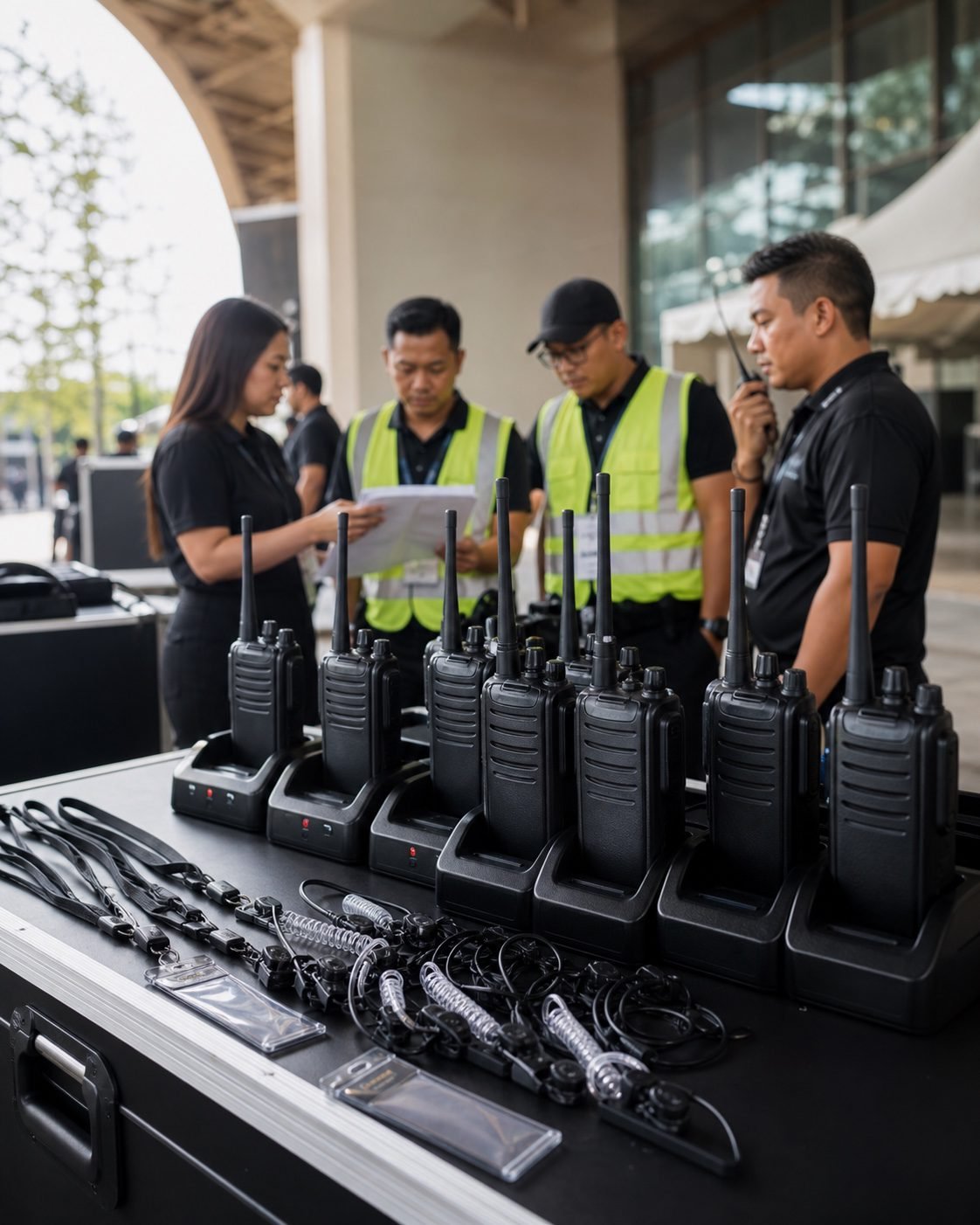
Review Octogen's walkie talkie rental options for a short-term requirement. Include the quantity, dates, location and working areas in the rental enquiry; confirm suitability and availability with Octogen.
Octogen: walkie talkie rental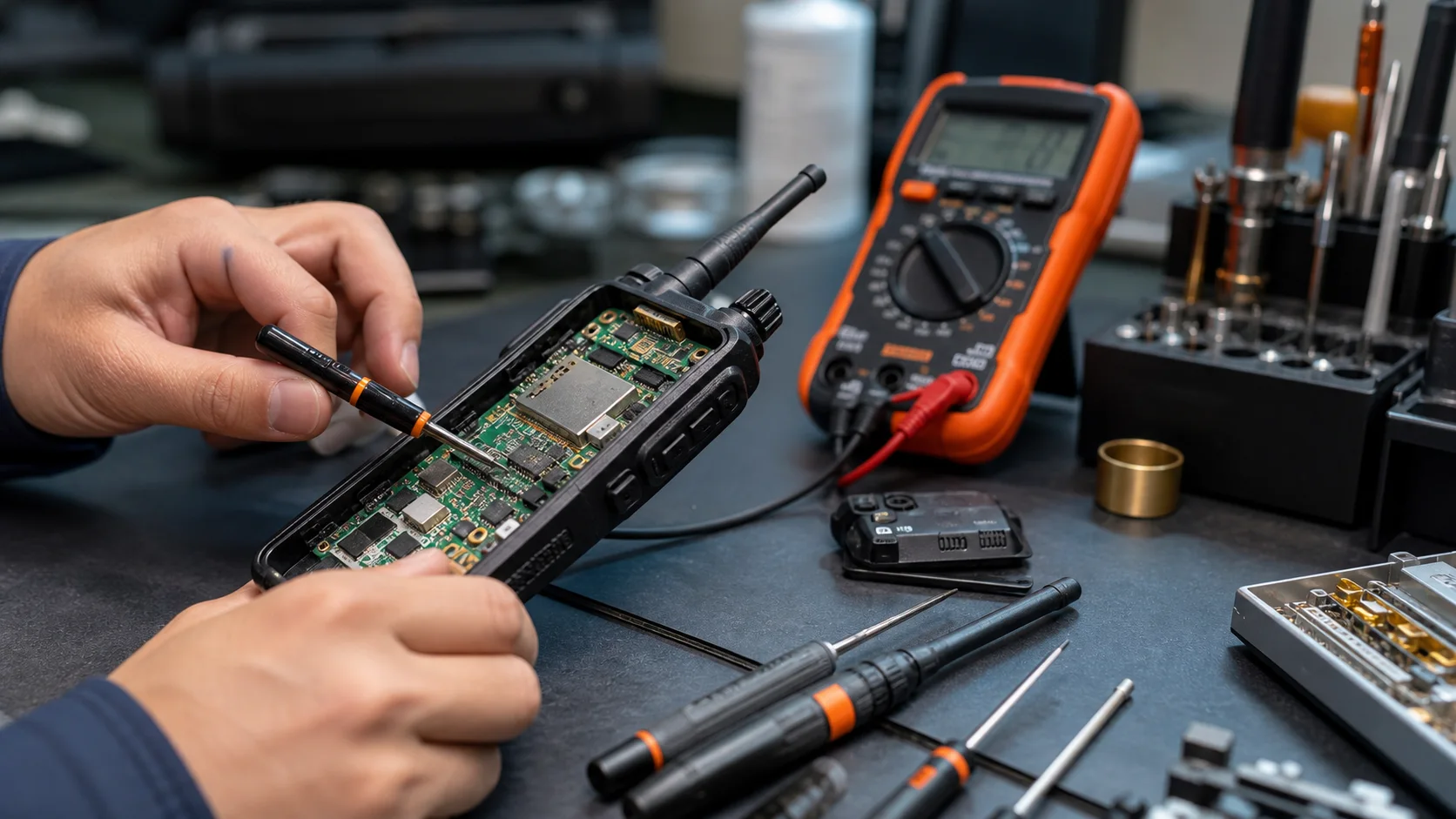
Review Octogen's repair service for a handset fault or programming issue. Provide the model and symptoms. Repeated failures across a site may still need coverage assessment.
Octogen: radio repair and programmingSTART WITH THE SITE / 10
Tell us the location, team size, present equipment and where communication fails. We will start from the operating problem—not a product list.