A practical guide to planning walkie-talkie communication for hotel teams: handovers, user groups, work zones, batteries and a first equipment brief.
01 / THE GUIDE IN CONTEXTHOTEL COMMUNICATION
For hotel operations, front-office, housekeeping and F&B coordination teams
Hotel radio communication planning
A hotel does not have one radio job. The lobby needs short guest-facing updates; housekeeping needs room and floor handovers; F&B needs service calls that do not spill into every other conversation. Start by making those working paths visible before deciding how many radios to buy or rent.
OBOR KUASA / INDUSTRY USE-CASE GUIDE · Use these guides to organise the operational details, equipment questions and next checks that lead to a clearer radio communication brief. They are general planning resources and do not report a particular team's work, location or outcome.
01 / THE OPERATING QUESTION
Start with the work.
A hotel does not have one radio job. The lobby needs short guest-facing updates; housekeeping needs room and floor handovers; F&B needs service calls that do not spill into every other conversation. Start by making those working paths visible before deciding how many radios to buy or rent.
02 / THE PLANNING DECISION
Make the next step visible.
A useful plan separates the people who must hear one another from the people who only need an escalation path. It also names the shift handover, charging location and the places where a missed call would slow guest service.
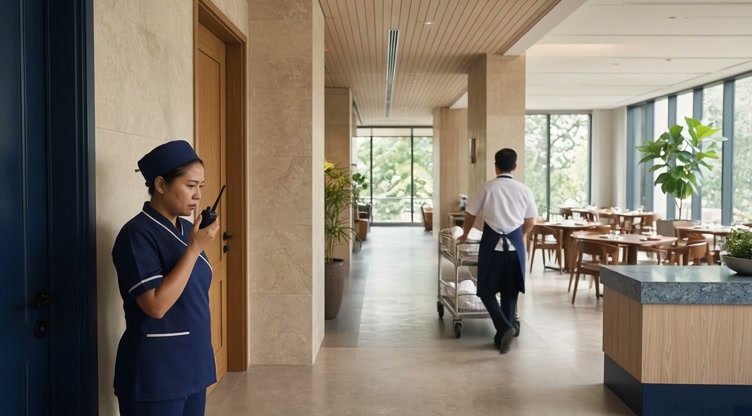
Operating scene reference.
02 / THE PLANNING PATH (04)
START WITH THE WORK. THEN BUILD THE BRIEF.
A useful plan separates the people who must hear one another from the people who only need an escalation path. It also names the shift handover, charging location and the places where a missed call would slow guest service.
Use this as a planning guide for a comparable operating environment. Confirm equipment, coverage, programme and service decisions against the actual worksite and current equipment.
01 / 04USE-CASE GUIDE
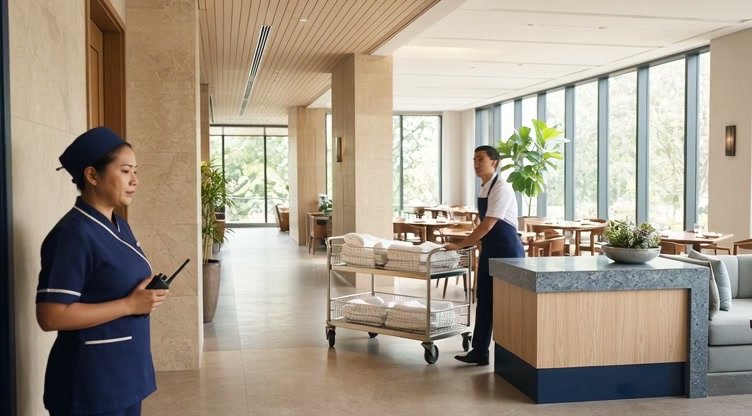
Operating scene reference for the first planning step.
01 / MAP THE SHIFTUSE-CASE GUIDE
List who needs a live call path.
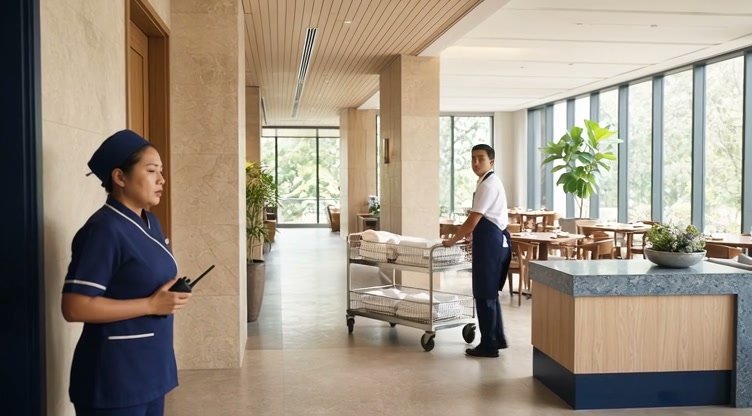
Operating scene reference for map the shift.
Write each role that needs a radio during the busiest period, not the total headcount. Mark the calls that cross departments and the calls that should stay within one team.
PLANNING MAP
01Lobby and arrival
02Rooms and floors
03Food and beverage
04Duty escalation
USE THIS NEXT
Map The Shift
Write each role that needs a radio during the busiest period, not the total headcount. Mark the calls that cross departments and the calls that should stay within one team.
Record what must pass from one shift or team to another: open guest requests, restricted access, maintenance follow-up or a location that needs attention. A radio channel helps only when the next owner is known.
PLANNING MAP
01Shift change
02Department handover
03Escalation contact
04Repeat-back rule
USE THIS NEXT
Name The Handovers
Record what must pass from one shift or team to another: open guest requests, restricted access, maintenance follow-up or a location that needs attention. A radio channel helps only when the next owner is known.
Operating scene reference for check the working route.
Use a simple floor or route plan to identify lifts, back corridors, kitchens, loading areas and outdoor paths that matter to the job. Decide whether a technical assessment is needed before making coverage promises.
PLANNING MAP
01Guest-facing areas
02Back-of-house routes
03Vertical travel
04Known weak areas
USE THIS NEXT
Check The Working Route
Use a simple floor or route plan to identify lifts, back corridors, kitchens, loading areas and outdoor paths that matter to the job. Decide whether a technical assessment is needed before making coverage promises.
Count radios, accessories and charging after the work is mapped.
Operating scene reference for build the brief.
Bring the simultaneous-user count, current radio models, earpiece needs, spare-battery routine and charging position into one brief. That lets an equipment, rental or service conversation begin with the operating need.
PLANNING MAP
01Simultaneous users
02Accessories
03Charging points
04Named brief owner
USE THIS NEXT
Build The Brief
Bring the simultaneous-user count, current radio models, earpiece needs, spare-battery routine and charging position into one brief. That lets an equipment, rental or service conversation begin with the operating need.
Should each hotel department use a separate channel?
+
Start with the calls each role must hear and the escalation route between teams. Separate channels can reduce unnecessary traffic, but the channel plan should still make urgent cross-team communication possible.
02
Do we choose the radio count before mapping the hotel?
+
No. Count simultaneous users after the work zones, handovers and shift pattern are clear. A total alone does not show who must communicate at the same time.
03
When should a hotel ask for a coverage assessment?
+
Ask when calls need to work across varied floors, back-of-house routes, lifts, outdoor areas or known weak spots. A model name and a radio count do not establish coverage for a particular building.
About this guide
Use these guides to organise the operational details, equipment questions and next checks that lead to a clearer radio communication brief. They are general planning resources and do not report a particular team's work, location or outcome. Use it to prepare a clearer internal brief and then confirm decisions against the actual environment, equipment and operating need.

 01 / THE OPERATING QUESTION