A practical specification checklist for teams selecting radios for rain, dust, wash-down or other weather-exposed operating conditions.
01 / THE GUIDE IN CONTEXTOUTDOOR RADIO SPECIFICATION
For supervisors preparing an outdoor, wet-work or dusty-work radio requirement
Weather-exposed radio specification checklist
Outdoor exposure is an operating condition, not a product label. The team needs to record water, dust, temperature, handling, charging and accessory conditions before an exact device specification can be checked.
OBOR KUASA / INDUSTRY USE-CASE GUIDE · Use these guides to organise the operational details, equipment questions and next checks that lead to a clearer radio communication brief. They are general planning resources and do not report a particular team's work, location or outcome.
01 / THE OPERATING QUESTION
Start with the work.
Outdoor exposure is an operating condition, not a product label. The team needs to record water, dust, temperature, handling, charging and accessory conditions before an exact device specification can be checked.
02 / THE PLANNING DECISION
Make the next step visible.
A complete exposure brief helps the team verify model documentation and work rules without treating a marketing label as approval for every condition.
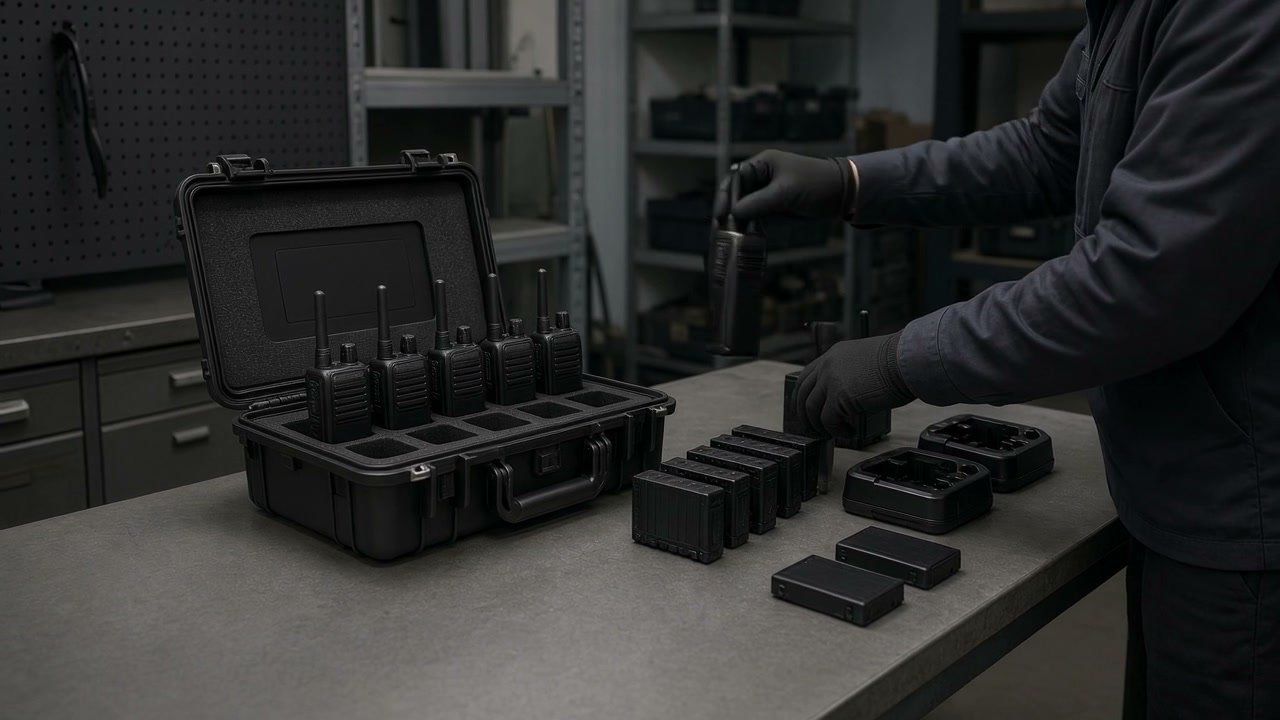
Operating scene reference.
02 / THE PLANNING PATH (04)
START WITH THE WORK. THEN BUILD THE BRIEF.
A complete exposure brief helps the team verify model documentation and work rules without treating a marketing label as approval for every condition.
Use this as a planning guide for a comparable operating environment. Confirm equipment, coverage, programme and service decisions against the actual worksite and current equipment.
01 / 04USE-CASE GUIDE
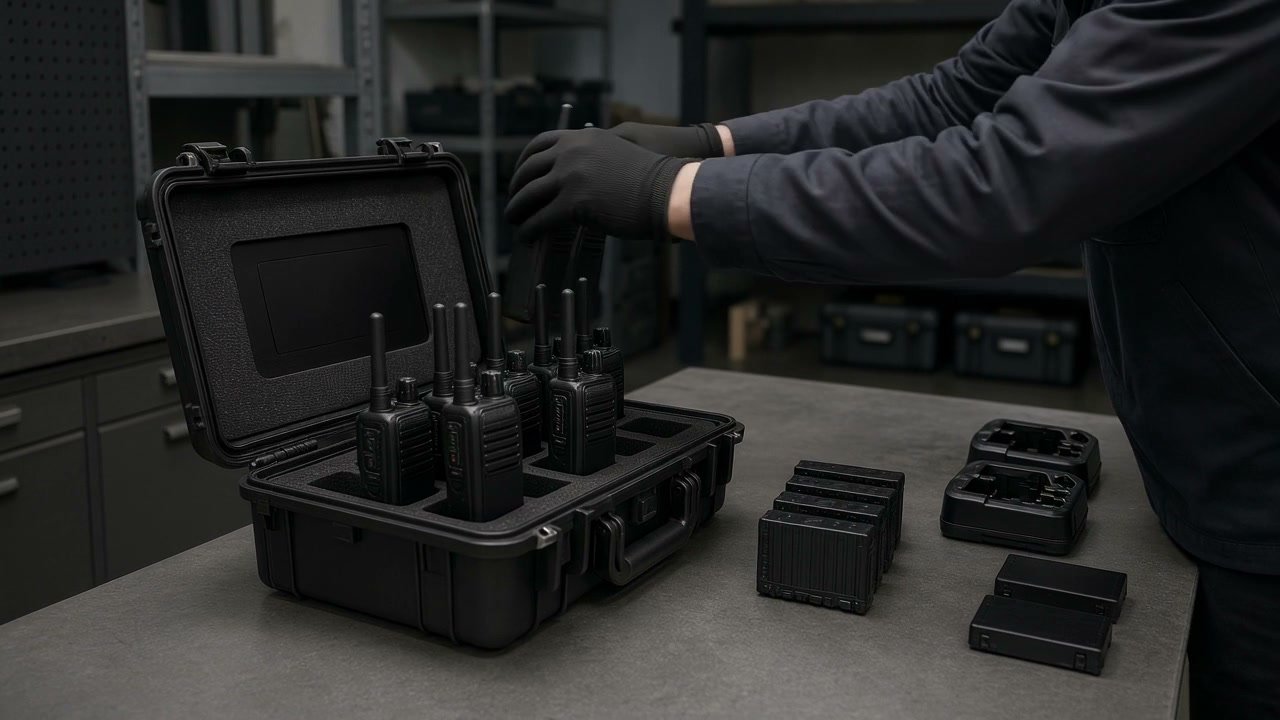
Operating scene reference for the first planning step.
01 / MAP THE EXPOSUREUSE-CASE GUIDE
Describe water, dust and handling conditions plainly.
Operating scene reference for map the exposure.
Record whether work involves rain, wash-down, dust, gloves, repeated drops, heat or a charging location that differs from the work area.
PLANNING MAP
01Water exposure
02Dust exposure
03Handling
04Charging location
USE THIS NEXT
Map The Exposure
Record whether work involves rain, wash-down, dust, gloves, repeated drops, heat or a charging location that differs from the work area.
List the exact radio, battery, antenna, charger and accessory combination. A rating or description for one item does not automatically apply to every attached part.
PLANNING MAP
01Radio
02Battery
03Antenna
04Accessories
USE THIS NEXT
Specify The Set
List the exact radio, battery, antenna, charger and accessory combination. A rating or description for one item does not automatically apply to every attached part.
Use current documentation for the exact equipment.
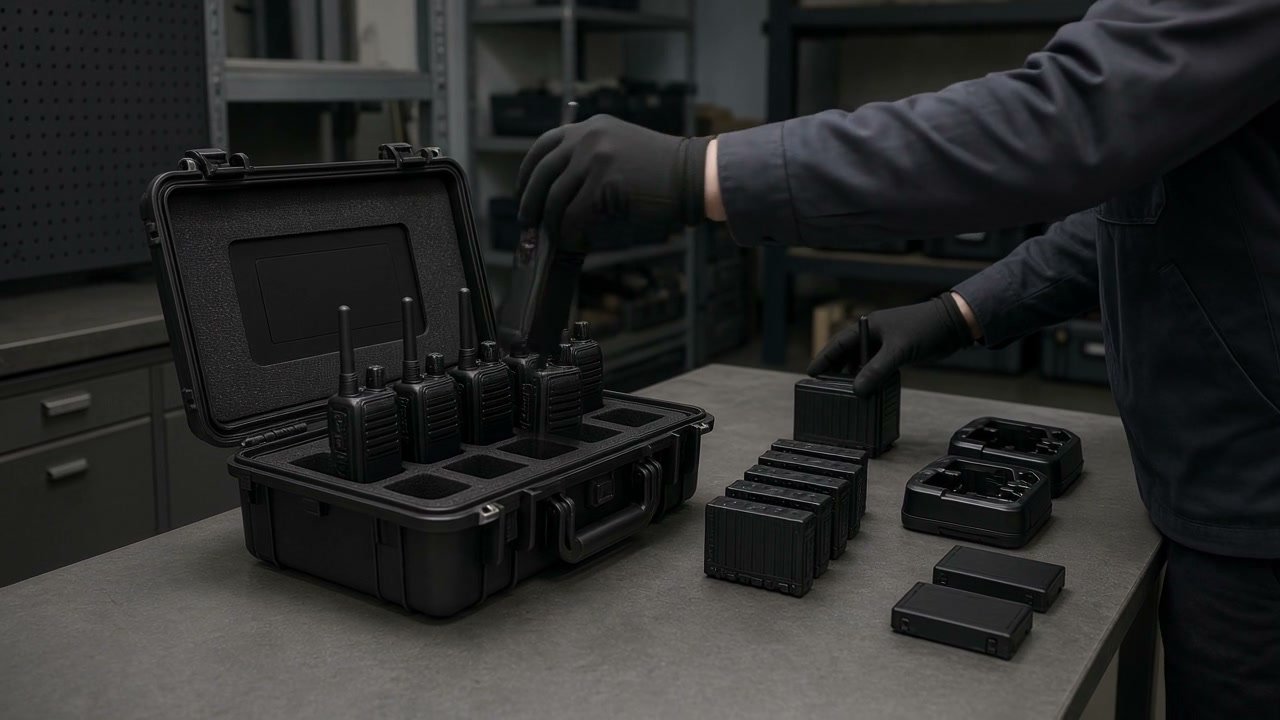
Operating scene reference for verify the evidence.
Check the current manufacturer information and the relevant work rules for the exact configuration. Keep any uncertainty visible rather than filling it with an assumption.
PLANNING MAP
01Current documentation
02Exact configuration
03Work rules
04Open question
USE THIS NEXT
Verify The Evidence
Check the current manufacturer information and the relevant work rules for the exact configuration. Keep any uncertainty visible rather than filling it with an assumption.
No. Ingress protection and hazardous-area suitability are different questions that need separate evidence and approval.
02
Can a battery or accessory be assumed to share a radio's condition rating?
+
No. Check the exact configuration and current documentation for each relevant component.
03
What should happen after a wet or dusty shift?
+
Use the local inspection, cleaning and charging routine, and record any condition that needs a service or replacement decision.
About this guide
Use these guides to organise the operational details, equipment questions and next checks that lead to a clearer radio communication brief. They are general planning resources and do not report a particular team's work, location or outcome. Use it to prepare a clearer internal brief and then confirm decisions against the actual environment, equipment and operating need.

 01 / THE OPERATING QUESTION