


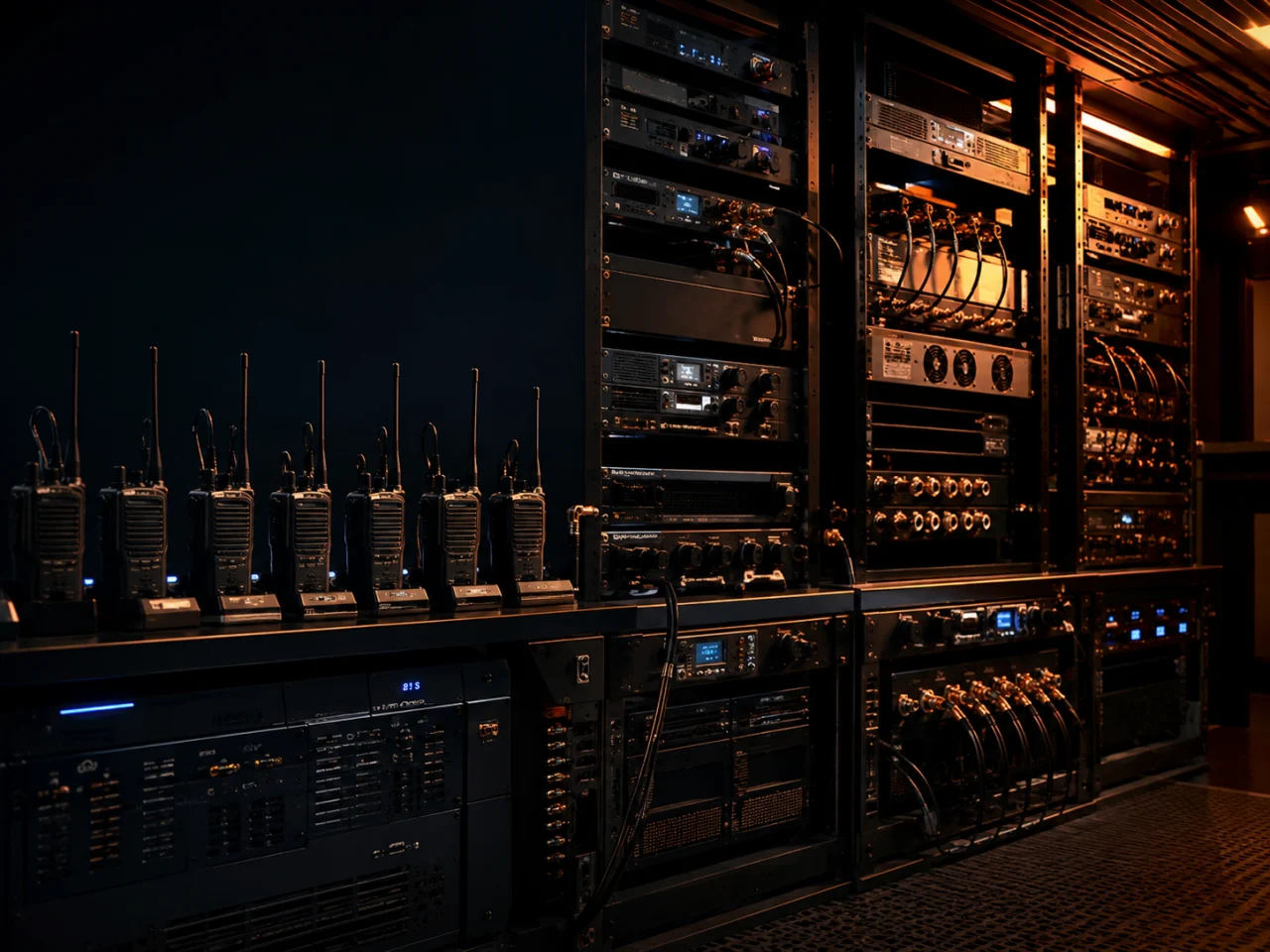
SECTION 01 / SIGNAL ROOMSIX GUIDES.
SIX GUIDES.
ONE EQUIPMENT ROOM.
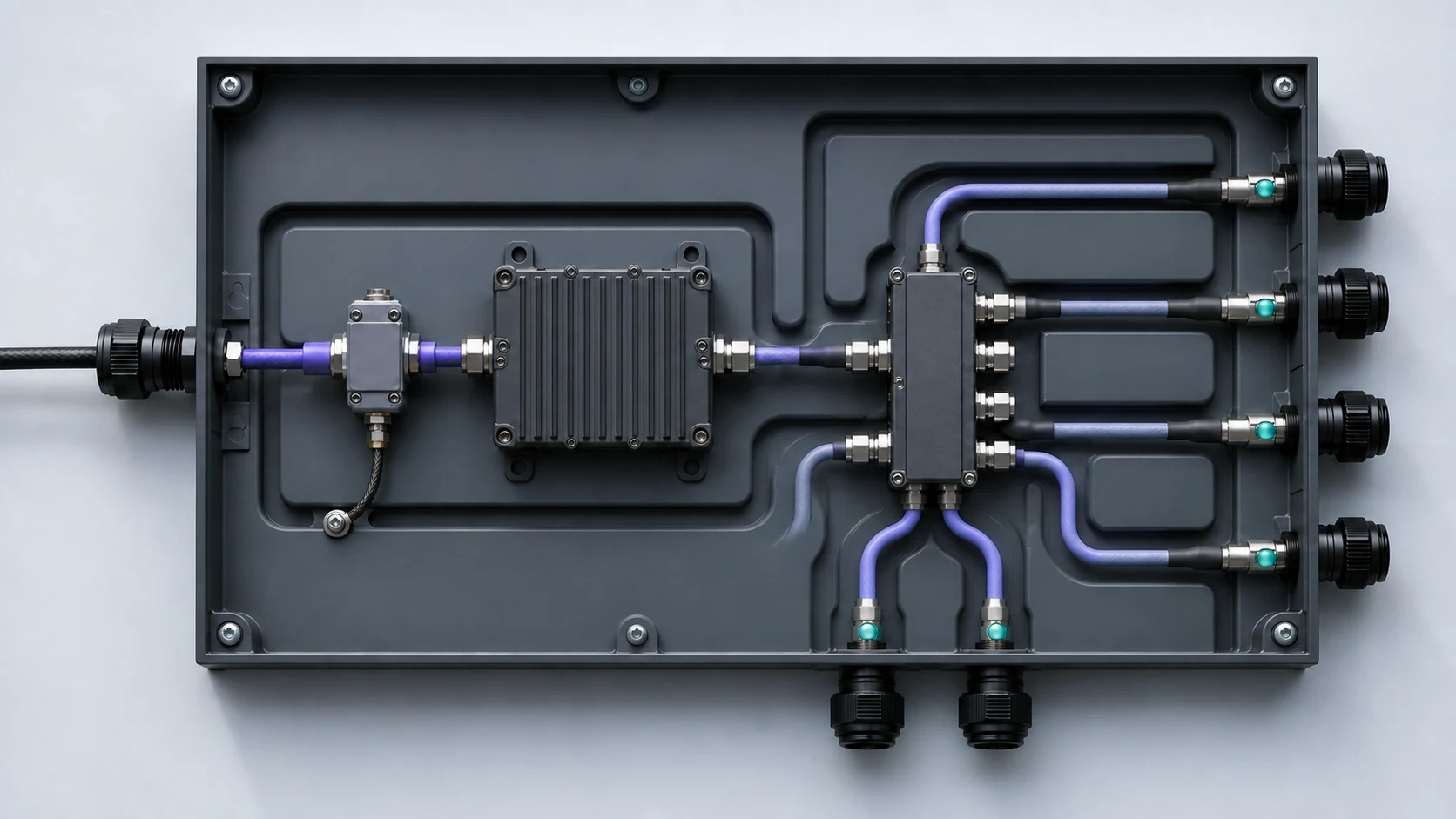
Explore the repeater, six-way charger, DC backup, BDA / DAS head-end, RF distribution and alarm monitoring system.
EXPLORE THE GUIDES →Learn which repeater, battery, RF and network alarms matter, how they should reach operators, and why alarm ownership is part of the system design.
FIELD DECISIONAn alarm is only useful when it has an owner, a route, a priority and a tested response. Collecting status without that chain creates noise.
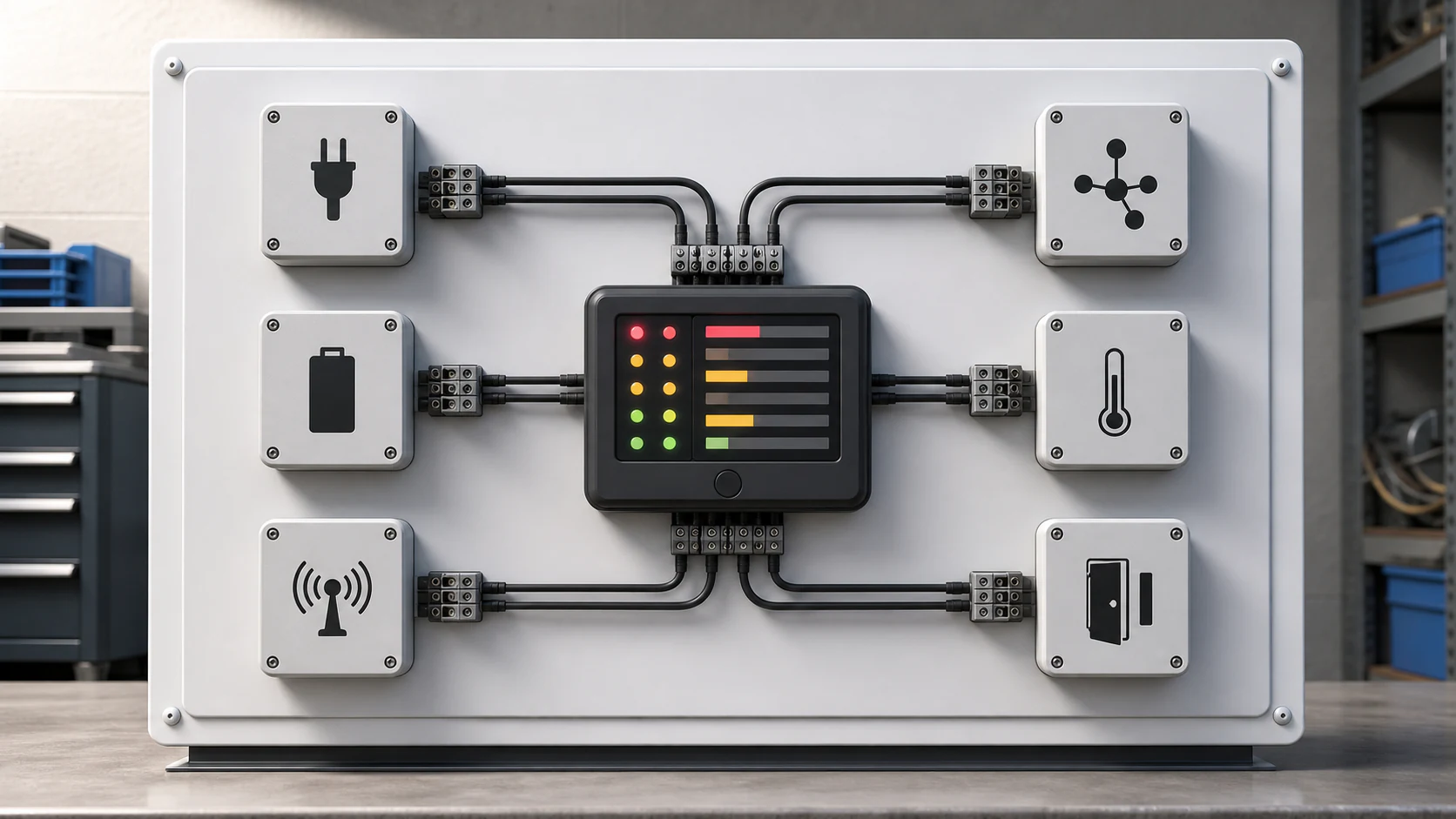
A practical radio monitoring system watches the conditions that can interrupt service: AC power, charger and battery state, repeater health, RF output or antenna alarms, transport links, enclosure access and temperature. It then sends a clear event to someone who knows the site, the priority and the first safe check.
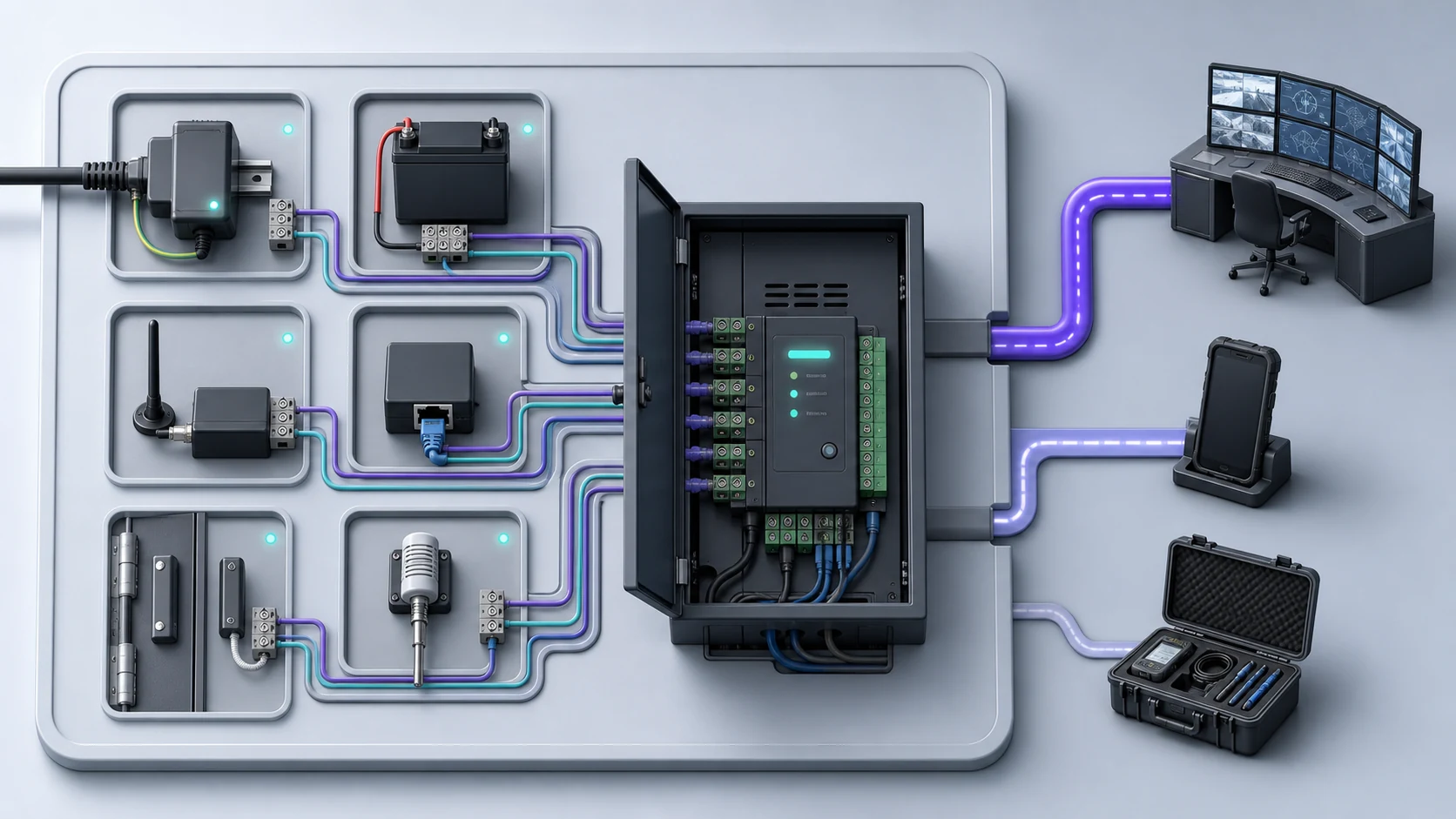
Six field conditions become useful only when the monitoring cabinet prioritises and routes them to an acknowledged response.
Equipment exposes a dry contact, status input or IP event.
The monitoring point turns different inputs into clear named conditions.
Service-affecting faults are separated from warnings and maintenance events.
The event reaches the responsible team through the agreed route.
The response closes with a field check, action and timestamped record.
List every alarm source and define its normal, warning and fault state.
Map each event to an owner, contact route, acknowledgement target and escalation path.
Keep monitoring power and connectivity within the same continuity design as the radio service.
Test a real alarm from source to notification, then confirm acknowledgement and restoration records.
If every status change pages the same team, operators learn to ignore the channel.
A fault system on unprotected power can disappear at the exact moment it is needed.
A code alone does not tell a responder which rack, branch, site access rule or first check applies.
Common points include AC fail, charger or battery fault, low battery, repeater failure, high temperature, RF or antenna fault and network-link loss. The required list depends on the equipment and service design.
Many systems can report status over IP, while others expose dry contacts. A gateway or monitoring platform can combine both, provided the power, network and access controls are engineered for the site.
Test during commissioning, after relevant changes and on a planned maintenance cycle. The interval should reflect the service risk, site access and equipment guidance.
Examples of repeater, interference, RSSI, VSWR and temperature monitoring.
BDA and fibre DAS alarm-panel example.
AC, battery and repeater alarm configuration context.
Product references illustrate operating principles and available equipment features. Final design, compatibility and regulatory decisions must follow the selected equipment, site survey and applicable Malaysian assignment conditions.
Obor Kuasa can survey the site, engineer the system and document the commissioning results around the way your team actually works.
REQUEST A SITE AUDIT






 SR / 01
 SR / 02
 SR / 03
 SR / 04
 SR / 05