


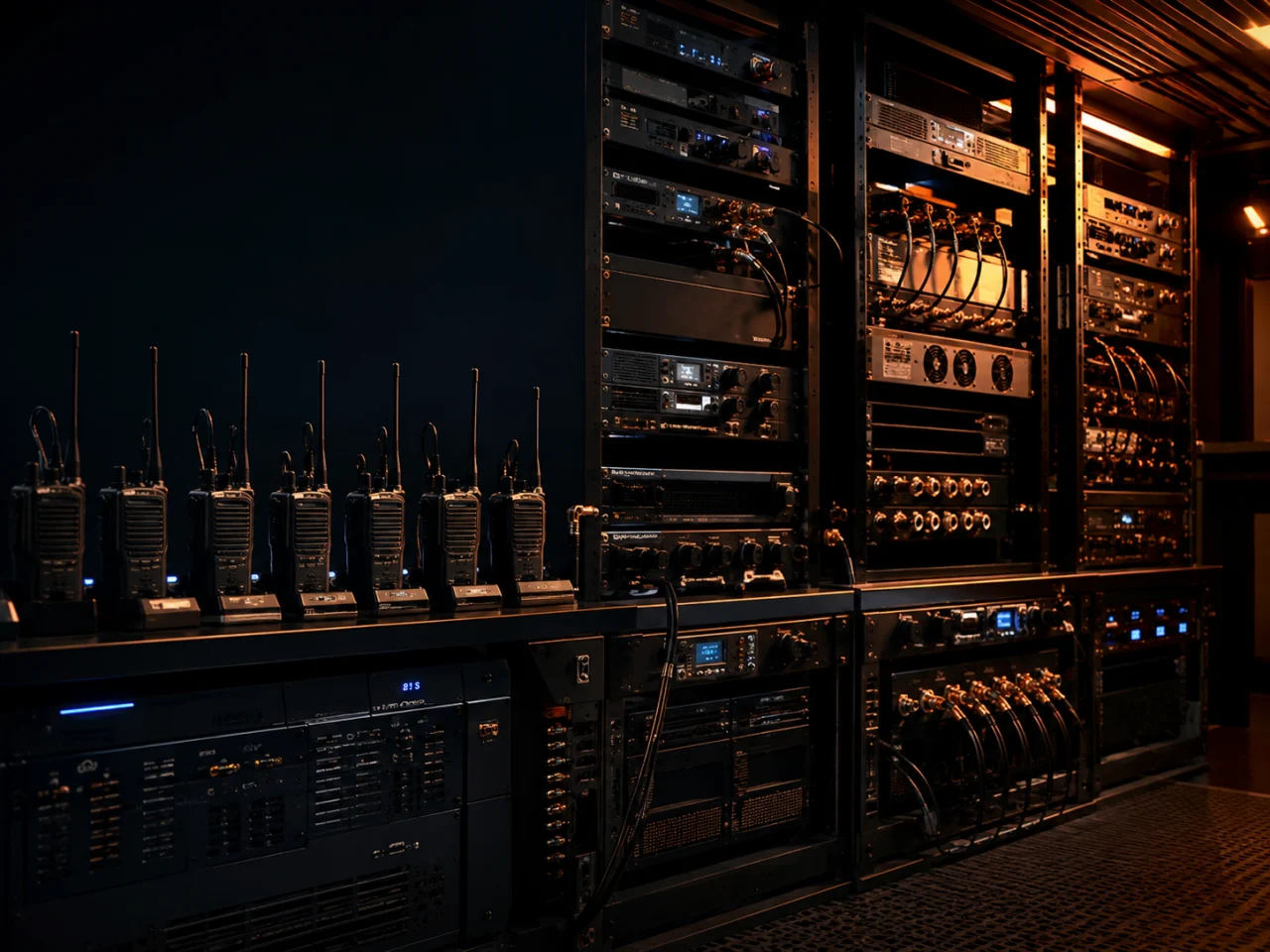
SECTION 01 / SIGNAL ROOMSIX GUIDES.
SIX GUIDES.
ONE EQUIPMENT ROOM.
Explore the repeater, six-way charger, DC backup, BDA / DAS head-end, RF distribution and alarm monitoring system.
EXPLORE THE GUIDES →Understand how a BDA or DAS head-end conditions donor RF and carries it to indoor zones through coax or fibre—without hiding the design risks.
FIELD DECISIONStart with measured coverage, service bands and building loss. The equipment topology comes after the RF problem is defined.
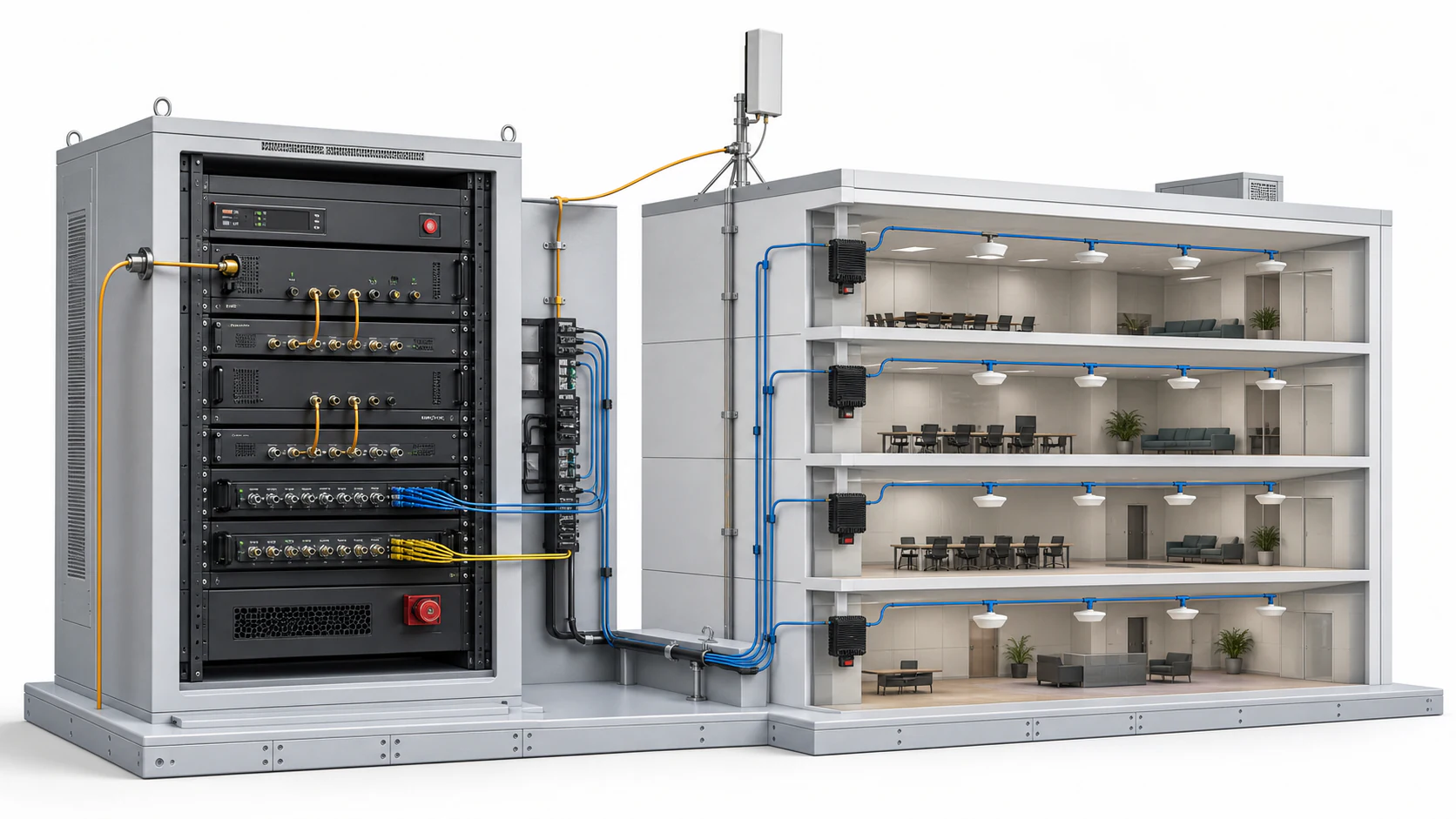
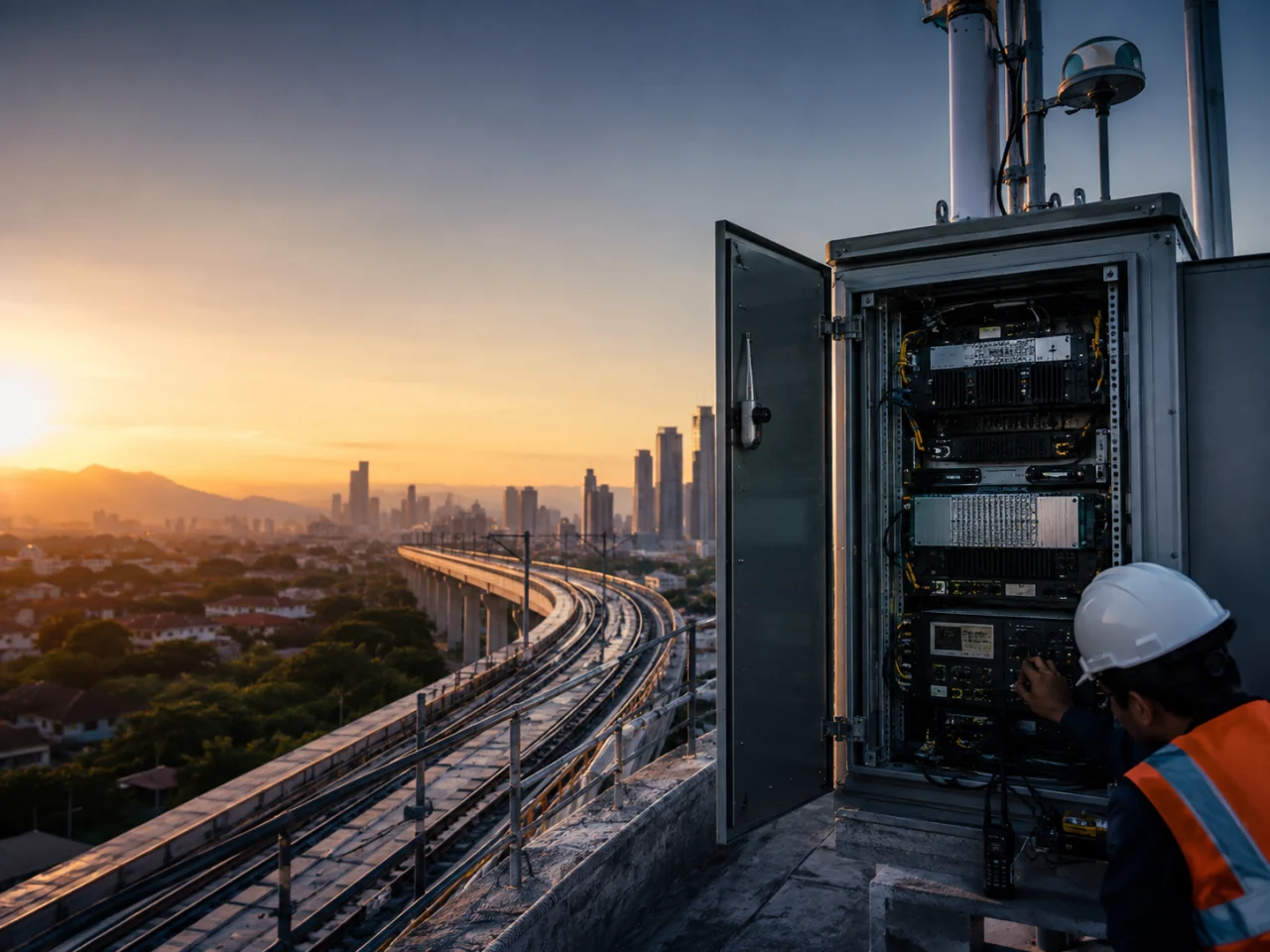
The head-end is the controlled entry and processing point for an in-building RF distribution system. It receives a donor or base-station signal, applies the designed filtering and gain, then feeds coaxial or fibre paths to remote units and indoor antennas. BDA describes bi-directional amplification; DAS describes the wider distributed antenna network around it.
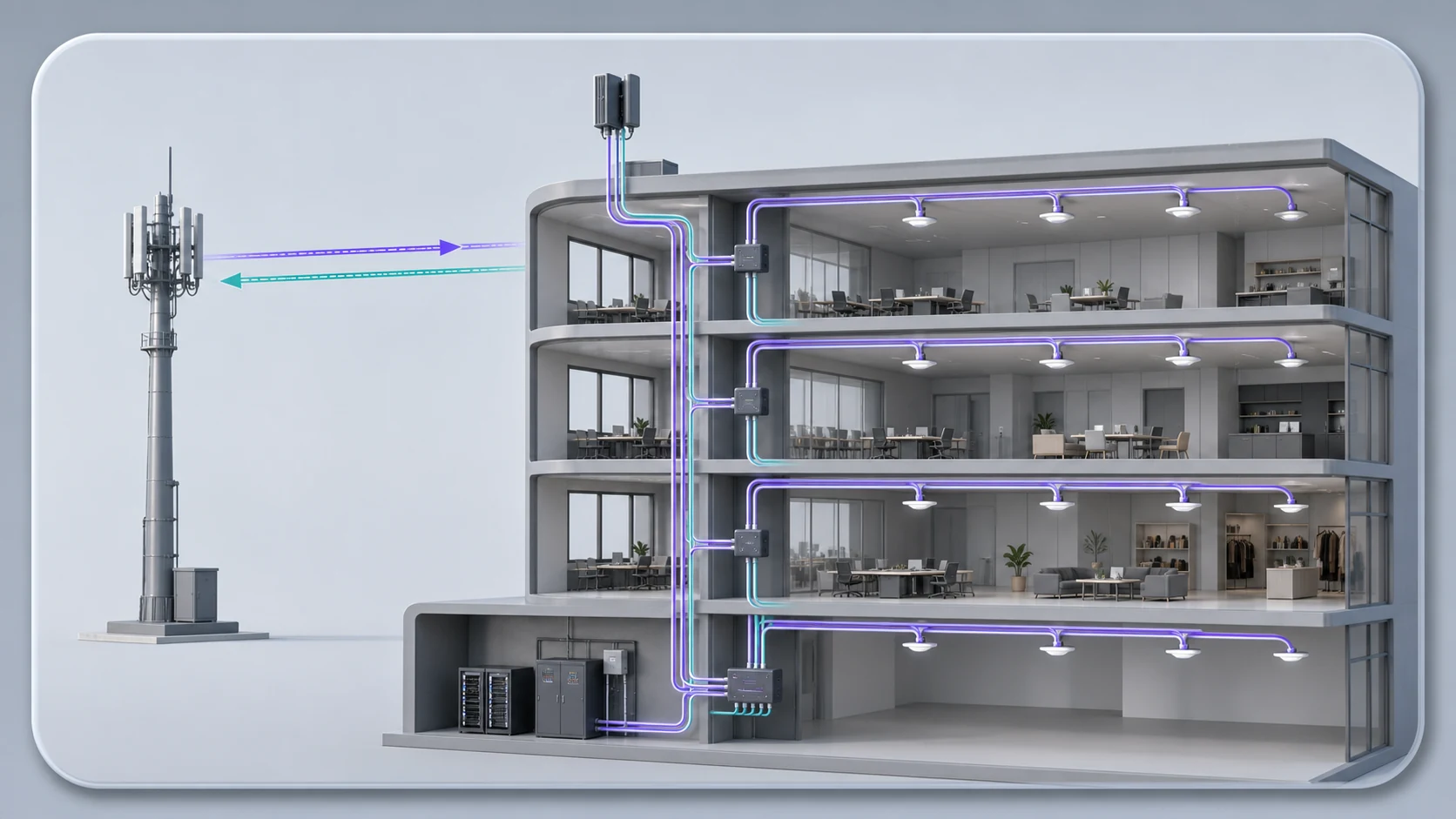
Donor signal, head-end, riser and indoor antennas form one measured downlink and uplink path through the building.
A rooftop antenna or base source provides the external RF path.
The head-end filters the required band and controls gain.
Coax or optical links carry the conditioned signal across the building.
Remote units convert and distribute RF close to the served floors.
Indoor antennas deliver and receive coverage in planned zones.
Measure donor quality and existing indoor coverage before choosing gain or remote-unit locations.
Confirm the required bands, system direction, isolation and authority conditions for the intended service.
Model cable, splitter and coupler loss for every branch, then verify levels at the remote and antenna points.
Commission uplink and downlink performance while watching for oscillation, interference and excessive noise.
Concrete, glazing, risers, plant rooms and lift cores produce different loss and coverage shapes.
Too much loop gain relative to antenna isolation can make a bi-directional system unstable.
A user may hear the system while the head-end still cannot hear the user clearly on uplink.
A BDA amplifies RF in both directions. A DAS is the distributed network of head-end equipment, transport, remotes, passive devices and antennas that delivers coverage through a building. A BDA can form part of a DAS.
No. Donor quality, antenna isolation, building materials, service bands, noise and distribution loss all affect the result. The design should follow a survey and link budget.
Fibre can carry signals to distant remote units with lower transport loss and easier reach than long RF coax runs. The remote unit then converts the signal back to RF near the served area.
Head-end, transport and remote-access-point architecture.
In-building coverage and DAS context.
VHF/UHF master and remote-unit system example.
Product references illustrate operating principles and available equipment features. Final design, compatibility and regulatory decisions must follow the selected equipment, site survey and applicable Malaysian assignment conditions.
Obor Kuasa can survey the site, engineer the system and document the commissioning results around the way your team actually works.
REQUEST A SITE AUDIT




 SR / 01
 SR / 02
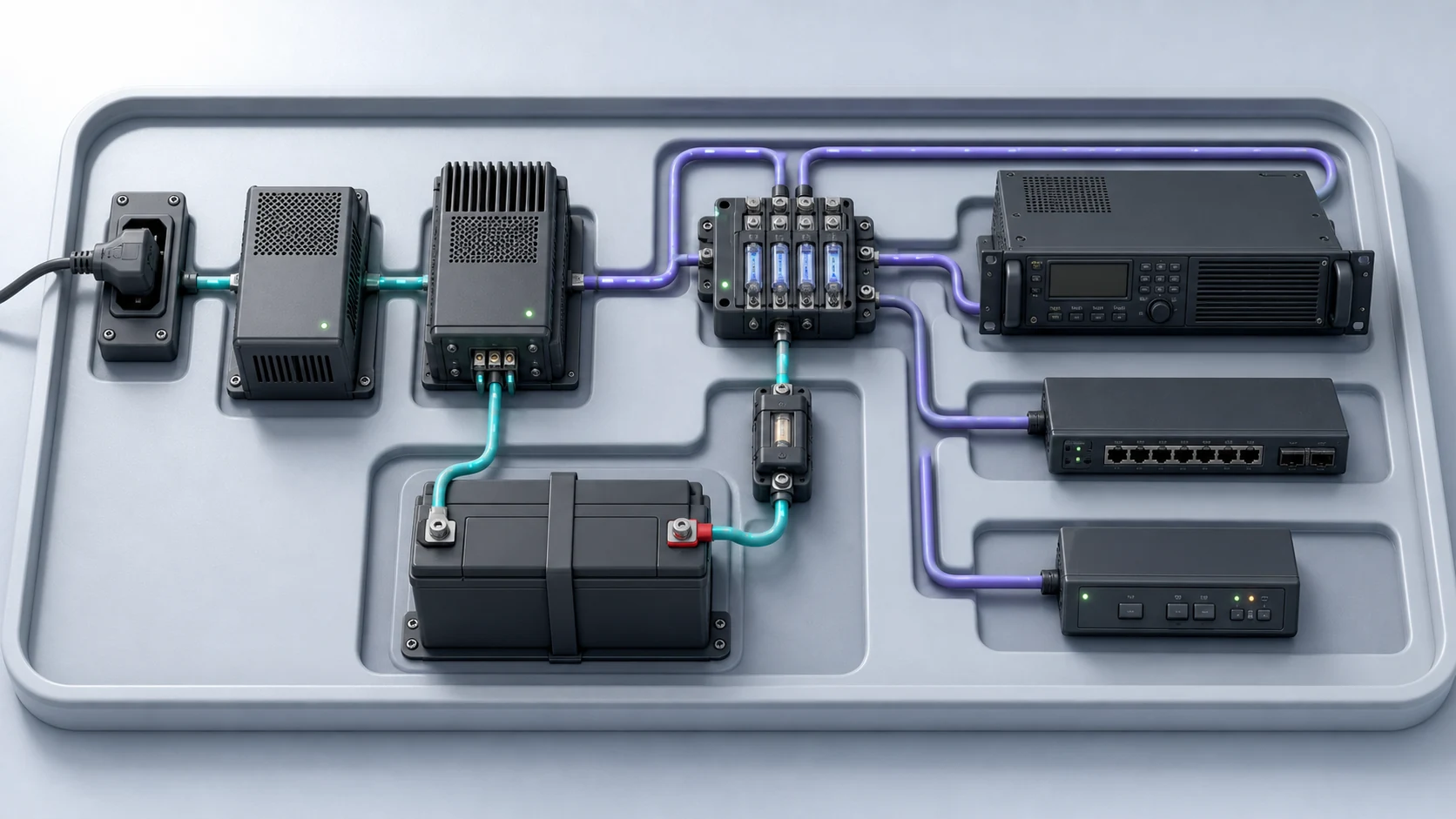 SR / 03
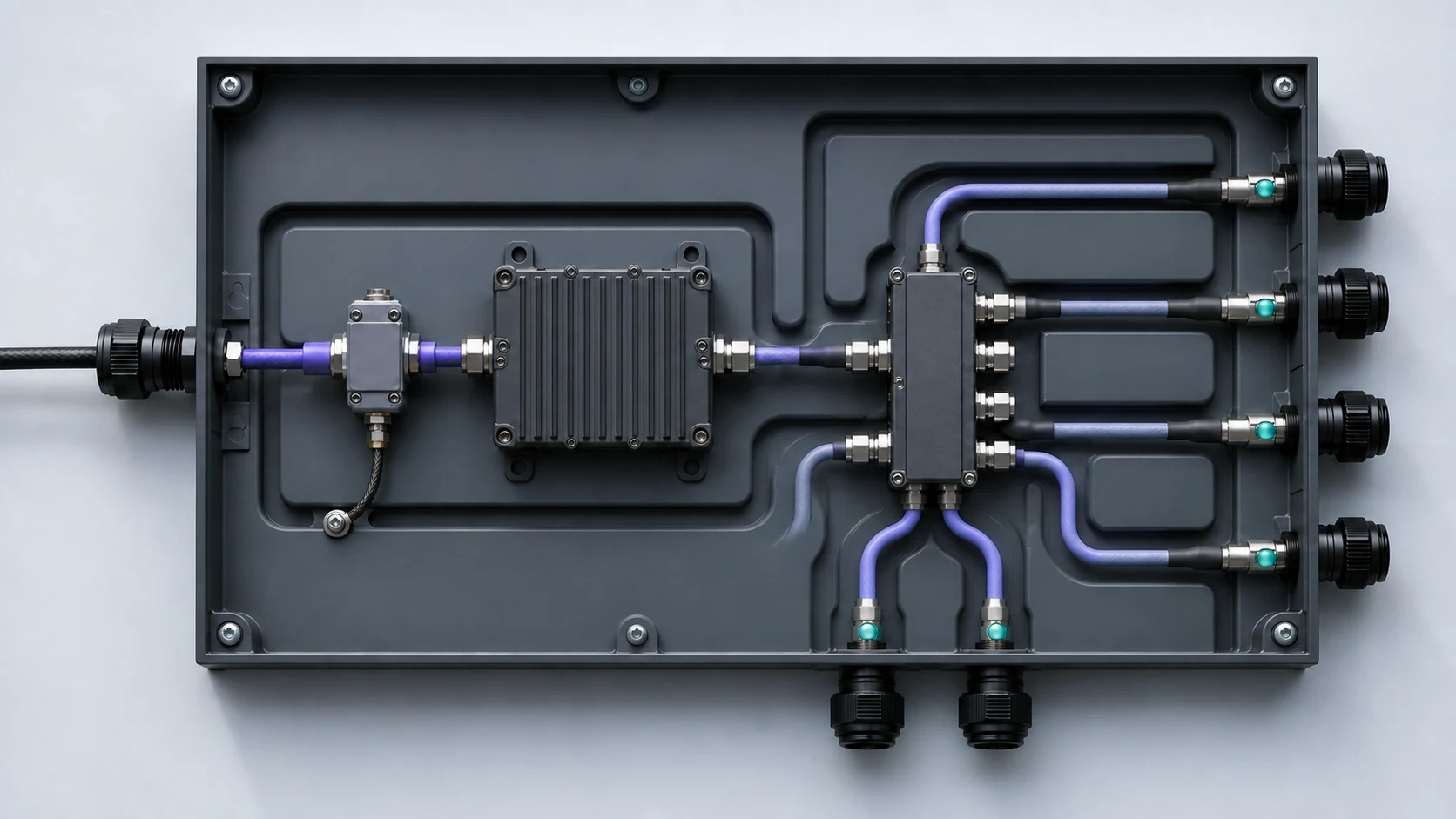 SR / 05
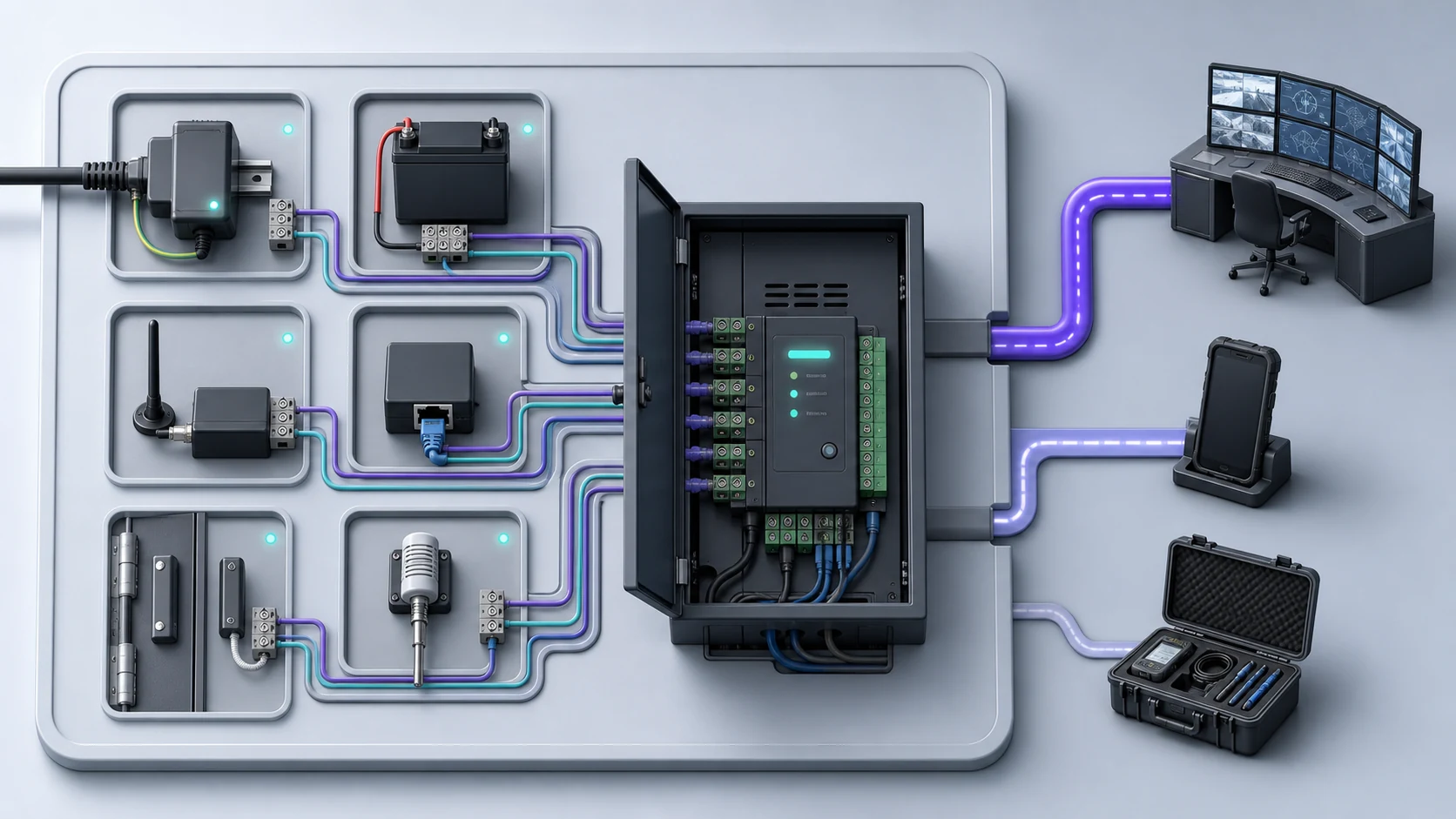 SR / 06