How to separate a radio repair assessment, parts request and replacement option so a service decision can be checked item by item.
01 / THE GUIDE IN CONTEXTRADIO REPAIR PLANNING
For maintenance teams, purchasing staff and radio fleet owners
Radio repair, parts or replacement
A radio that does not work may need an assessment, a part, labour, a charger check or a replacement option. When every item is combined into one vague request, it becomes hard to see which action is being considered and why.
OBOR KUASA / INDUSTRY USE-CASE GUIDE · Use these guides to organise the operational details, equipment questions and next checks that lead to a clearer radio communication brief. They are general planning resources and do not report a particular team's work, location or outcome.
01 / THE OPERATING QUESTION
Start with the work.
A radio that does not work may need an assessment, a part, labour, a charger check or a replacement option. When every item is combined into one vague request, it becomes hard to see which action is being considered and why.
02 / THE PLANNING DECISION
Make the next step visible.
Keep the faulty unit, parts proposed and new equipment option on separate lines. That preserves a clear decision path without assuming the cause of the fault or the outcome of a repair.
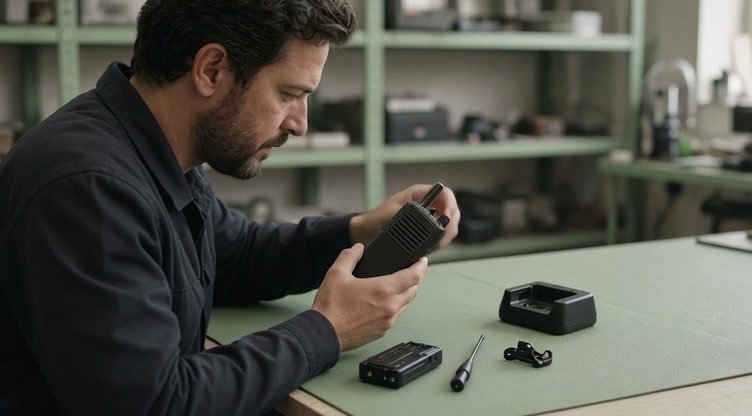
Operating scene reference.
02 / THE PLANNING PATH (04)
START WITH THE WORK. THEN BUILD THE BRIEF.
Keep the faulty unit, parts proposed and new equipment option on separate lines. That preserves a clear decision path without assuming the cause of the fault or the outcome of a repair.
Use this as a planning guide for a comparable operating environment. Confirm equipment, coverage, programme and service decisions against the actual worksite and current equipment.
01 / 04USE-CASE GUIDE
Operating scene reference for the first planning step.
01 / LOG THE SYMPTOMUSE-CASE GUIDE
Describe what the radio does, not what you assume failed.
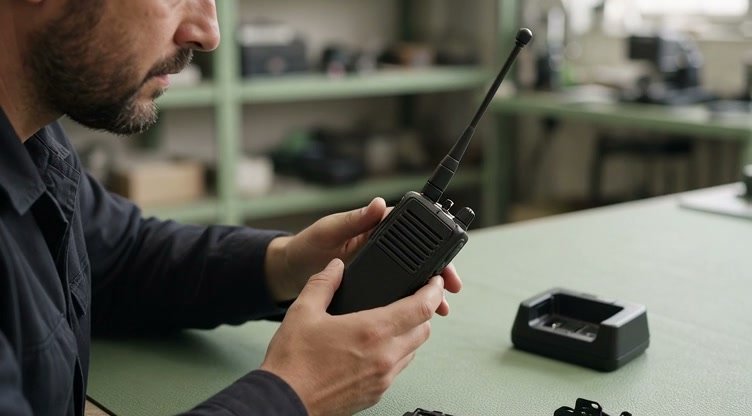
Operating scene reference for log the symptom.
Record the exact unit, the observed problem, when it happens and whether the battery, charger or accessory is involved. This gives the assessment a starting point without turning a symptom into a diagnosis.
PLANNING MAP
01Asset identity
02Observed symptom
03When it occurs
04Related equipment
USE THIS NEXT
Log The Symptom
Record the exact unit, the observed problem, when it happens and whether the battery, charger or accessory is involved. This gives the assessment a starting point without turning a symptom into a diagnosis.
Ask for any proposed part and service work to be stated separately. The team should be able to see what is being assessed, what may be replaced and what work is included.
PLANNING MAP
01Assessment
02Parts
03Labour
04Return check
USE THIS NEXT
List The Scope
Ask for any proposed part and service work to be stated separately. The team should be able to see what is being assessed, what may be replaced and what work is included.
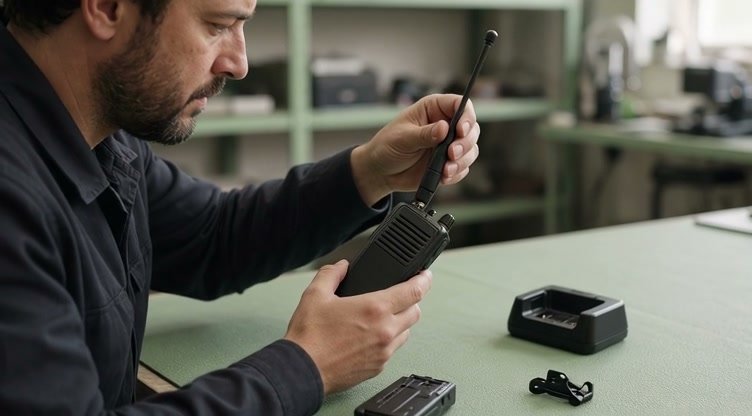
Operating scene reference for compare the options.
If a replacement is considered, identify it separately from the repair scope. Compare compatibility, included equipment and the role it would serve rather than assuming it replaces the faulty unit automatically.
PLANNING MAP
01Repair option
02Replacement option
03Compatibility
04Required accessories
USE THIS NEXT
Compare The Options
If a replacement is considered, identify it separately from the repair scope. Compare compatibility, included equipment and the role it would serve rather than assuming it replaces the faulty unit automatically.
At handover, match the returned items to the service record and note the agreed functional checks. Carry unresolved questions forward instead of treating the paperwork as proof of a completed result.
PLANNING MAP
01Returned items
02Recorded work
03Functional check
04Open question
USE THIS NEXT
Close The Handover
At handover, match the returned items to the service record and note the agreed functional checks. Carry unresolved questions forward instead of treating the paperwork as proof of a completed result.
Does a part on a request prove that part was faulty?
+
No. A proposed part or supplied part does not establish the cause of a fault. The assessment and any recorded check should remain separate from the part list.
02
When should a replacement radio be quoted separately?
+
Whenever it is an addition, a fallback option or a possible replacement. Separate it from the repair scope so compatibility, accessories and the intended role can be reviewed clearly.
03
What should be checked when equipment is returned?
+
Match the radio and accessories to the record, note the work stated, perform the agreed functional checks and carry any unresolved issue into the next action.
About this guide
Use these guides to organise the operational details, equipment questions and next checks that lead to a clearer radio communication brief. They are general planning resources and do not report a particular team's work, location or outcome. Use it to prepare a clearer internal brief and then confirm decisions against the actual environment, equipment and operating need.

 01 / THE OPERATING QUESTION