
 01 / THE OPERATING QUESTION
Start with the work.
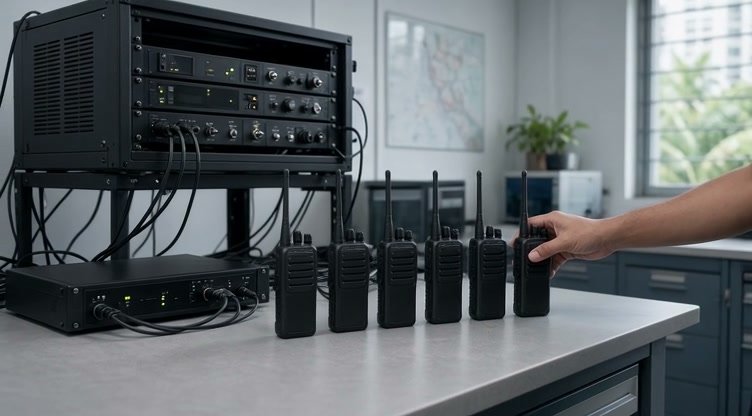
A repeater decision connects the radios, band, antenna path, power, operating environment and the places where people need to communicate. It is not a standalone equipment comparison.
05 / REPEATER SYSTEM PLANNING
A planning guide for comparing UHF and VHF repeater options by intended band, handheld variants, operating areas, infrastructure and coverage evidence.
A repeater decision connects the radios, band, antenna path, power, operating environment and the places where people need to communicate. It is not a standalone equipment comparison.
01 / THE OPERATING QUESTIONA repeater decision connects the radios, band, antenna path, power, operating environment and the places where people need to communicate. It is not a standalone equipment comparison.
 02 / THE PLANNING DECISION
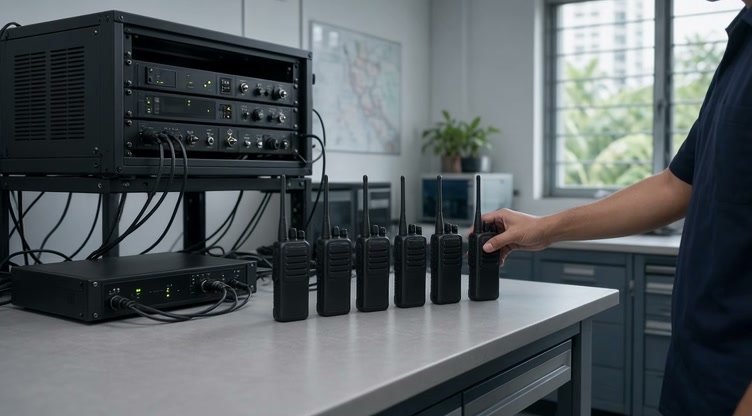
Start with the current handheld variants and the operating areas. Only then can the team ask whether a UHF or VHF path, site assessment and supporting infrastructure are relevant.
Operating scene reference.
Start with the current handheld variants and the operating areas. Only then can the team ask whether a UHF or VHF path, site assessment and supporting infrastructure are relevant.
Use this as a planning guide for a comparable operating environment. Confirm equipment, coverage, programme and service decisions against the actual worksite and current equipment.Record exact handheld models, variants, current programming and the groups that must communicate. This prevents a band discussion from being detached from the equipment already in use.
Record exact handheld models, variants, current programming and the groups that must communicate. This prevents a band discussion from being detached from the equipment already in use.
Mark buildings, levels, open areas, routes and obstructions relevant to the work. Separate an operational need from an assumed coverage result.
Mark buildings, levels, open areas, routes and obstructions relevant to the work. Separate an operational need from an assumed coverage result.
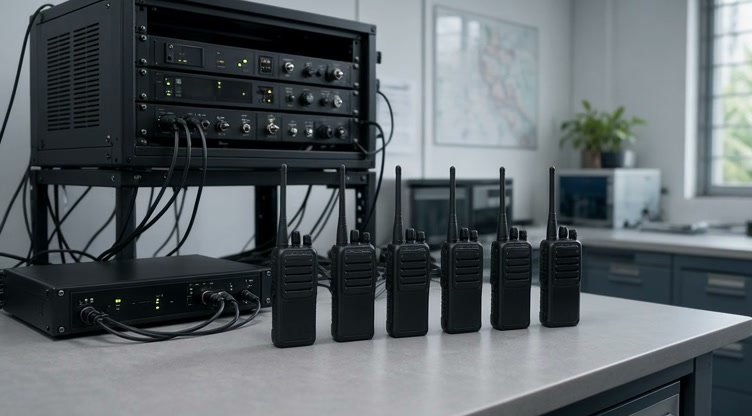
A repeater path includes more than the repeater: there may be antenna position, feeder route, power, mounting and maintenance considerations. These should be reviewed for the actual site.
A repeater path includes more than the repeater: there may be antenna position, feeder route, power, mounting and maintenance considerations. These should be reviewed for the actual site.
Name the working calls and locations that would be checked after a system change. Avoid treating a proposed configuration as evidence of coverage before the relevant assessment and verification are complete.
Name the working calls and locations that would be checked after a system change. Avoid treating a proposed configuration as evidence of coverage before the relevant assessment and verification are complete.
Neither is universally better. The appropriate path depends on the actual radios, band plan, environment, infrastructure and the calls that need to work at the site.
No. A quantity does not establish radio variants, operating areas, antenna path, power or the evidence needed to assess the site.
They distinguish a proposed system direction from the calls that have actually been checked in the relevant operating areas.
Use these guides to organise the operational details, equipment questions and next checks that lead to a clearer radio communication brief. They are general planning resources and do not report a particular team's work, location or outcome. Use it to prepare a clearer internal brief and then confirm decisions against the actual environment, equipment and operating need.
Read the two-way radio repeater guideA planning guide for comparing UHF and VHF repeater options by intended band, handheld variants, operating areas, infrastructure and coverage evidence.
TALK ABOUT YOUR WORK